
Your car should feel stable on the road. It should absorb bumps and keep you in control. When suspension starts failing, driving becomes uncomfortable. In some cases, it becomes unsafe.
Many drivers ignore early warning signs. Small issues turn into major repairs. In worst cases, they lead to loss of control. That is why you need to understand the signs early.
This guide explains clear and practical symptoms. You will also learn what action to take at the right time.
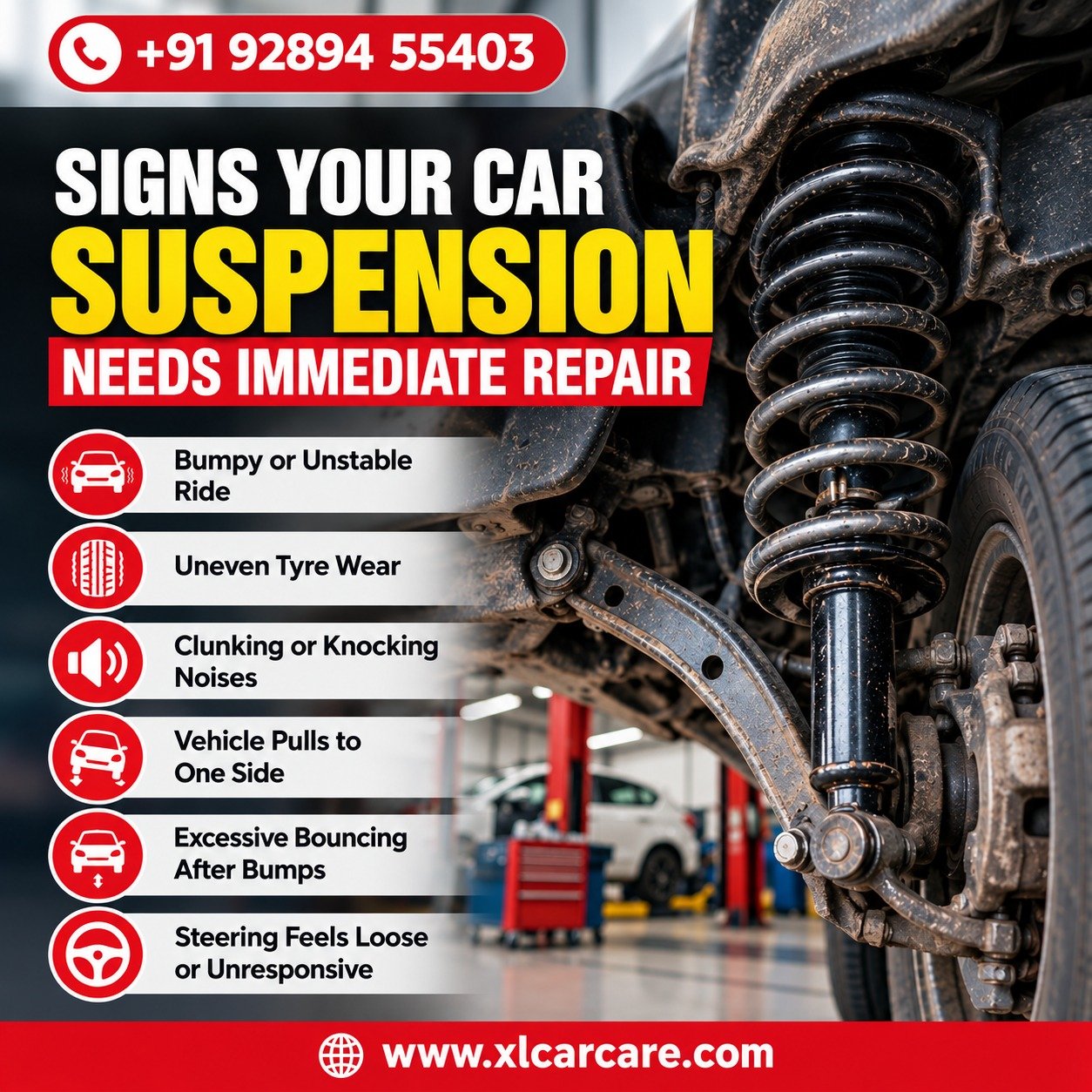
What Does a Car Suspension Do?
The suspension system connects your car to its wheels. It includes shock absorbers, struts, springs, and linkages.
Its main job is simple. It keeps your car stable and smooth on the road.
- Absorbs shocks from bumps and potholes
- Keeps tyres in contact with the road
- Improves handling and control
- Maintains ride comfort
When this system fails, every drive feels rough. Control reduces. Braking becomes less effective.
Signs Your Car Suspension Needs Immediate Repair
1. Excessive Bouncing After Bumps
Your car should settle quickly after hitting a speed breaker. If it keeps bouncing, something is wrong.
This usually means worn-out shock absorbers. They are not able to control the movement of springs.
What you will notice:
- Car keeps bouncing after bumps
- Unstable feeling on uneven roads
- Loss of comfort during driving
Risk: Reduced control at high speed. Longer stopping distance.
What to do: Get shock absorbers checked. Do not delay replacement.
2. Unusual Noises While Driving
A healthy suspension stays silent. If you hear clunking or knocking sounds, it is a warning.
These sounds usually come from worn bushings, loose joints, or damaged components.
Common sounds:
- Clunking over bumps
- Squeaking during turns
- Rattling on rough roads
Risk: Parts may fail completely. This can affect steering control.
What to do: Inspect suspension joints and mounts. Tightening or replacement may be needed.
3. Car Pulling to One Side
Your car should move straight when you release the steering. If it pulls left or right, there is a problem.
This can happen due to suspension imbalance or alignment issues.
What you will notice:
- Car drifts without steering input
- Uneven control on straight roads
- Steering correction needed constantly
Risk: Higher chances of accidents, especially at high speed.
What to do: Check alignment and suspension components together.
4. Uneven Tyre Wear
Tyres should wear evenly. If one side wears faster, suspension may be the reason.
Bad suspension affects tyre contact with the road.
Signs to check:
- Bald patches on tyres
- One side more worn than the other
- Irregular tread pattern
Risk: Reduced grip. Higher chance of tyre burst.
What to do: Inspect suspension before replacing tyres. Otherwise, the new tyres will also wear fast.
5. Nose Diving While Braking
When you apply brakes, the car should stay balanced. If the front dips too much, suspension is weak.
This usually means worn front shocks.
What you will notice:
- Front of car dips sharply
- Rear feels light
- Unstable braking
Risk: Reduced braking efficiency. Loss of control in emergency braking.
What to do: Replace worn shock absorbers. Check brake system as well.
6. Steering Feels Loose or Unstable
Steering should feel tight and responsive. If it feels loose, suspension may be failing.
This happens when joints or linkages wear out.
Symptoms:
- Delay in steering response
- Car feels unstable on turns
- Extra effort needed to control direction
Risk: Dangerous at high speed. Poor handling in sharp turns.
What to do: Inspect tie rods, bushings, and suspension joints.
7. Oil Leakage from Shock Absorbers
Shock absorbers contain fluid. If you see oil leakage, they are damaged.
Without fluid, shocks cannot absorb impact.
What you will notice:
- Oil marks near wheels
- Reduced ride comfort
- More bouncing
Risk: Complete suspension failure over time.
What to do: Replace leaking shocks immediately.
Signs That Need Immediate Repair
Some suspension problems can wait for a short time. Some cannot. Ignoring serious signs can lead to loss of control.
These are warning signals. Do not delay inspection.
1. Loud Clunking with Loss of Control
If you hear a loud clunk and feel the car unstable, it is serious.
This may mean a broken suspension part. Driving further can damage other components.
Action: Stop driving at high speed. Visit a workshop immediately.
2. Steering Feels Extremely Loose
A slight looseness is manageable for a short time. But extreme looseness is dangerous.
You may feel the steering floating. The car may not respond instantly.
Action: Avoid highways. Get the steering and suspension checked together.
3. Visible Oil Leakage from Shocks
Small wear is normal over time. But visible oil leakage means failure has started.
Shock absorbers will not work without fluid.
Action: Replace shocks as soon as possible.
4. Car Feels Unstable at Normal Speed
If the car shakes or loses balance even at moderate speed, it is not safe.
This can happen due to multiple suspension failures.
Action: Avoid long drives. Get a full suspension inspection.
Signs You Can Monitor for a Short Time
Not every issue needs urgent repair. Some early signs can be observed for a few days.
Still, they should not be ignored.
1. Mild Noise on Rough Roads
Light noise may come from minor wear.
If it increases over time, it becomes serious.
Action: Monitor for a few days. Plan inspection if noise grows.
2. Slight Uneven Tyre Wear
Early tyre wear can happen due to alignment.
Suspension may still be in early wear stage.
Action: Rotate tyres. Check alignment. Inspect suspension if issue continues.
3. Slight Bounce After Speed Breakers
A small bounce is normal. Excess bounce is not.
If bounce increases, shocks may be weakening.
Action: Keep observing. Replace shocks if comfort reduces.
How to Check Suspension at Home?
You can do a basic inspection without tools. This helps you detect early problems.
1. Bounce Test
Press down the front of your car. Release it quickly.
The car should come back and settle in one movement.
If it bounces more than once, shocks may be weak.
2. Visual Inspection
Look near the wheels.
- Check for oil leakage
- Look for broken or loose parts
- Inspect rubber bushings
Any visible damage needs attention.
3. Tyre Check
Check tyre surface carefully.
Uneven wear often points to suspension issues.
4. Listen While Driving
Drive on a slightly rough road.
Turn off music and listen.
Any repeated sound is a sign.
Common Causes of Suspension Damage
Suspension does not fail suddenly. It wears out due to daily driving conditions.
1. Poor Road Conditions
Indian roads have potholes and uneven surfaces.
Frequent impact damages shocks and joints.
2. Speed Breakers at High Speed
Crossing speed breakers fast puts pressure on suspension.
This reduces the life of shock absorbers.
3. Overloading the Vehicle
Extra weight strains springs and shocks.
This leads to faster wear.
4. Lack of Regular Inspection
Small issues go unnoticed. They become major problems later.
Regular inspection prevents costly repairs.
5. Driving Luxury Cars on Rough Roads
Luxury cars have advanced suspension systems. They need proper care.
If not maintained, repair cost becomes high. In such cases, it is better to visit a trusted BMW repair and service center in Delhi NCR for accurate diagnosis.
Suspension Repair Cost in India
Suspension repair cost depends on the problem. It also depends on your car type.
Luxury cars cost more to repair. Regular cars are more affordable.
1. Shock Absorber Replacement
Shock absorbers are the most common parts to replace.
- Regular cars: ₹2,000 to ₹6,000 per shock
- Premium cars: ₹6,000 to ₹20,000 per shock
Labour cost is extra. It depends on the workshop.
2. Suspension Bush Replacement
Bushings wear out over time. They are small but important parts.
- Cost: ₹500 to ₹3,000 per set
Ignoring bush wear can damage bigger components.
3. Full Suspension Repair
If multiple parts fail, full repair is needed.
- Regular cars: ₹10,000 to ₹25,000
- Luxury cars: ₹30,000 to ₹1,00,000+
This includes shocks, joints, and other components.
4. Wheel Alignment and Balancing
Suspension work often needs alignment.
- Cost: ₹800 to ₹2,000
Proper alignment improves tyre life and control.
For high-end vehicles, it is better to choose experienced technicians. You can consider a reliable Mercedes repair and service center in Delhi NCR for accurate suspension work.
When Should You Visit a Mechanic?
Many drivers wait too long. This increases repair cost.
You should visit a mechanic when:
- You feel loss of control while driving
- You hear repeated suspension noise
- You notice uneven tyre wear
- Your car bounces more than usual
- You see oil leakage near wheels
Early inspection saves money. It also keeps your drive safe.
Final Thoughts
Your suspension system plays a key role in safety. It is not just about comfort.
Ignoring warning signs can lead to bigger problems. It can also increase accident risk.
Pay attention to how your car feels. Small changes often indicate bigger issues.
Take action early. Regular checks and timely repairs keep your car stable and safe on the road.