
Brake failure rarely happens without warning. Most issues build up slowly. Small problems get ignored. Over time, they turn into serious risks. Many drivers notice signs but delay action. This leads to sudden brake failure on the road.
Understanding the real reasons helps you stay safe. It also helps you avoid expensive repairs. This guide explains practical causes, real driving factors, and what you should do before things go wrong.
What Is Brake Failure?
Brake failure means the braking system does not respond properly. The car does not slow down as expected. Sometimes the brake pedal feels soft. In other cases, it becomes too hard.
The braking system works on hydraulic pressure. When you press the pedal, fluid transfers force to the wheels. If this system breaks anywhere, braking performance drops.
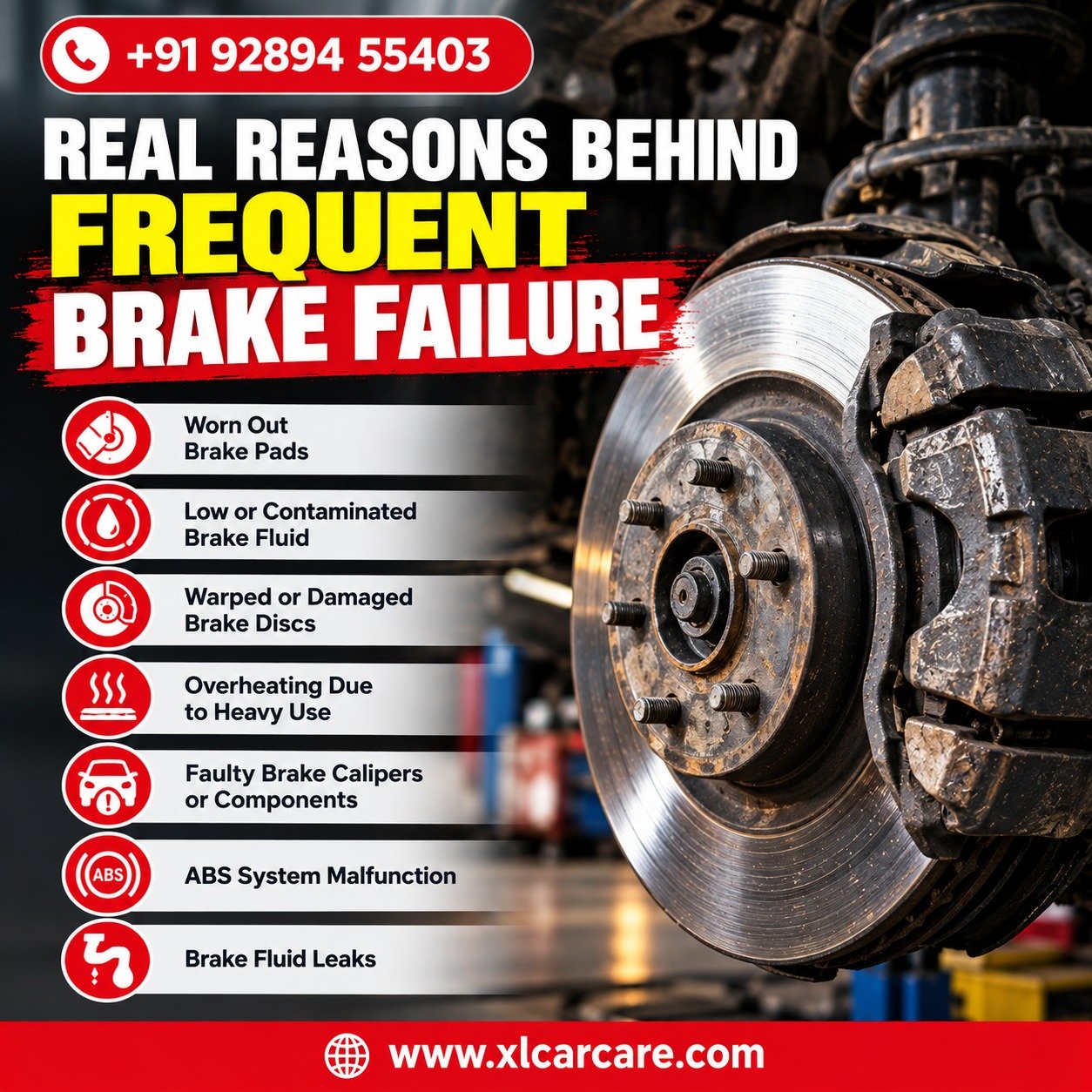
Main Causes of Brake Failure
Hydraulic System Problems
The braking system depends on fluid pressure. Any issue here can reduce stopping power.
Brake fluid leaks are a common reason. When fluid levels drop, pressure cannot build. The pedal may go down fully without effect.
Air in brake lines also causes problems. Air compresses easily. This reduces braking force. The pedal feels spongy.
Master cylinder failure is another cause. This component controls fluid pressure. If it fails, the system cannot respond properly.
Heat and Overheating Issues
Brakes generate heat during use. Excessive heat reduces efficiency.
Brake fade happens when components overheat. This is common in long downhill driving. The car does not slow down even after pressing the pedal.
Brake fluid can also boil under high temperature. This creates vapor bubbles. These bubbles reduce pressure and cause failure.
Mechanical Wear and Damage
Brake parts wear out with time. Ignoring wear leads to failure.
Brake pads become thin. When fully worn, metal parts touch each other. This reduces stopping power and damages rotors.
Damaged rotors reduce grip. The car may vibrate while braking.
Stuck or seized calipers also cause uneven braking. The car may pull to one side.
Real Reasons Behind Frequent Brake Failure
Many brake failures are not due to sudden faults. They happen because of daily habits and poor maintenance.
Skipping regular servicing is a major reason. Drivers delay inspections. Small issues remain unnoticed.
Using low-quality parts increases risk. Cheap brake pads wear faster. They also perform poorly under heat.
Ignoring warning signs makes the problem worse. Sounds, vibrations, and soft pedals should not be ignored.
Driving habits also play a role. Constant braking in traffic creates heat. Riding the brake pedal increases wear.
Improper repairs can also cause issues. Incorrect installation leads to uneven pressure. This affects braking performance.
Luxury vehicles need proper expertise. Specialized systems require trained technicians. If not handled correctly, failure chances increase. For example, professional servicing at an BMW repair and service center in Delhi NCR ensures correct diagnostics and brake calibration.
Warning Signs You Should Not Ignore
Brake failure gives early signals. Paying attention can prevent accidents.
A soft brake pedal is a common sign. It indicates fluid or pressure issues.
Grinding noise means brake pads are worn out. Metal parts may be touching.
If the car pulls to one side, there may be uneven braking force.
Burning smell indicates overheating. This usually happens after heavy braking.
Vibration in the steering wheel can indicate rotor damage.
Ignoring these signs increases the risk of sudden failure.
Impact of Indian Driving Conditions
Driving conditions in India add extra stress on brakes.
Heavy traffic leads to frequent braking. This increases wear and heat.
Waterlogged roads during monsoon affect brake performance. Water reduces friction temporarily.
Dust and debris also damage brake components over time.
Overloaded vehicles put extra pressure on the braking system.
Hill driving increases the risk of overheating. Continuous braking reduces efficiency.
Regular inspection becomes more important in such conditions.
What To Do If Brakes Fail While Driving?
Brake failure is dangerous. Staying calm is important.
Do not panic. Keep control of the steering.
Release the accelerator immediately.
Try pumping the brake pedal. This may restore pressure temporarily.
Shift to a lower gear. Engine braking helps slow the car.
Use the handbrake slowly. Do not pull it suddenly.
Move the vehicle to the side safely.
Turn on hazard lights to alert others.
How To Prevent Brake Failure?
Prevention is always better than repair.
Check brake fluid regularly. Low levels indicate leaks.
Replace brake pads before they wear out completely.
Inspect rotors and calipers during service.
Avoid aggressive driving. Smooth braking reduces wear.
Do not ignore unusual sounds or vibrations.
Get your vehicle inspected by professionals. Skilled technicians identify issues early. For example, a trusted Mercedes repair and service center in Delhi NCR can detect braking issues before they become serious.
Professional Maintenance
Modern cars have advanced braking systems. ABS and electronic controls require proper handling.
Incorrect servicing can damage the system. It can also reduce safety.
Experienced service centers use proper tools. They follow correct procedures.
Regular inspection ensures long-term safety. It also improves driving confidence.
Choosing a reliable service provider helps maintain performance. You can explore expert solutions at XL Car Care for proper diagnostics and maintenance support.
Conclusion
Brake failure is often preventable. Most cases happen due to neglect. Regular checks and careful driving reduce risk.
Understanding warning signs helps you act early. Timely maintenance improves safety. It also protects your vehicle from major damage.
Stay alert. Keep your braking system in good condition. Safe driving always starts with reliable brakes.