
Luxury cars are designed to deliver a smooth and refined driving experience. Brands like BMW, Mercedes-Benz, Audi, Porsche, Jaguar, and Land Rover use advanced engineering to minimize noise, vibration, and harshness inside the cabin.
However, many owners eventually notice that their vehicle no longer feels as smooth as it once did. Small vibrations begin to appear through the steering wheel, seats, floor, or dashboard. Over time, these vibrations become more noticeable and can affect both comfort and driving confidence.
Understanding why luxury car cabin vibrations become worse over time can help you identify problems early and avoid expensive repairs. In many cases, a minor issue that is ignored for months can lead to significant suspension, tire, or drivetrain damage.
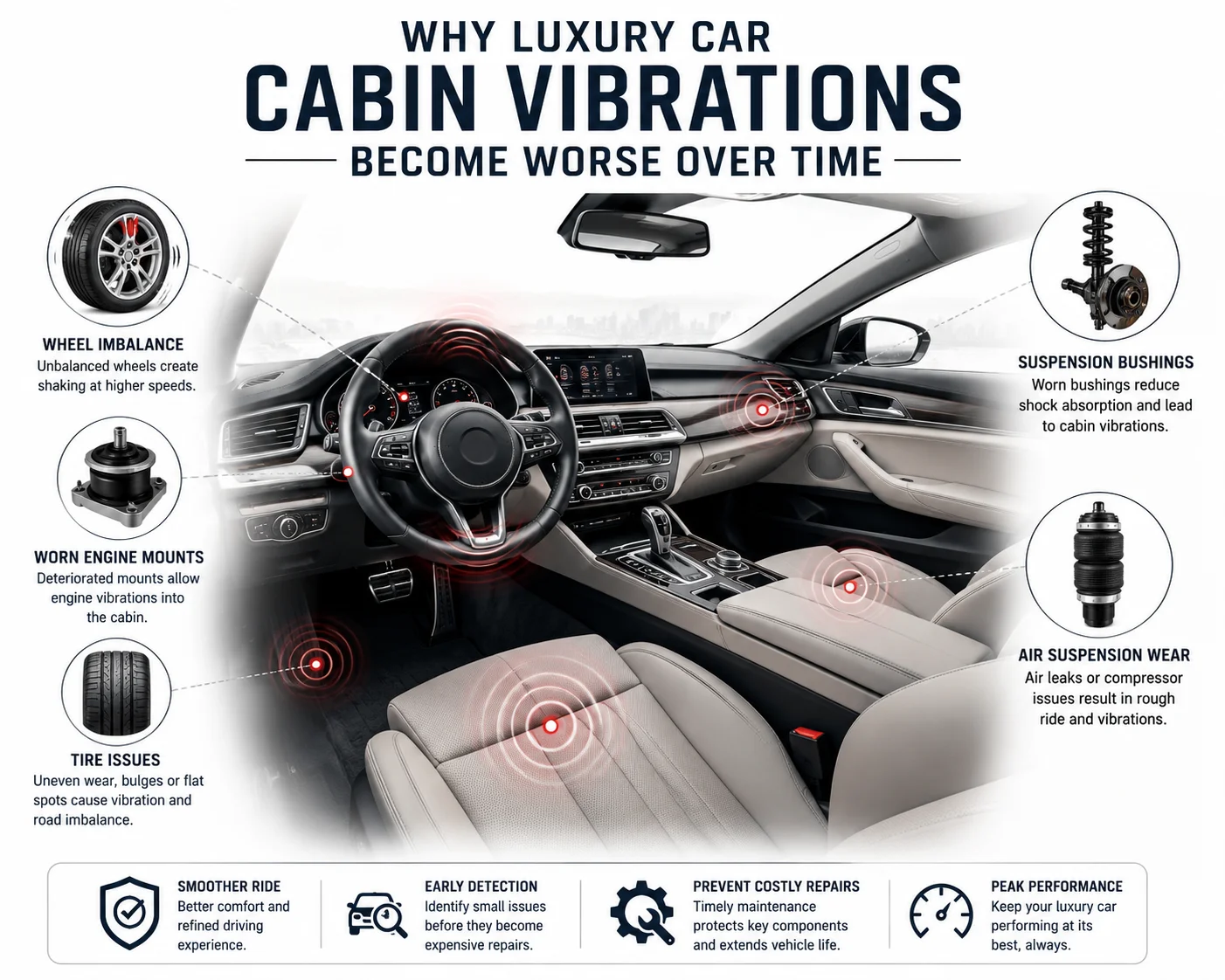
Why Luxury Cars Hide Vibrations Better Than Standard Vehicles?
Luxury vehicles are built with advanced vibration control systems. These systems are designed to isolate the cabin from road imperfections and mechanical movement.
Some common features include:
- Hydraulic engine mounts
- Adaptive suspension systems
- Air suspension technology
- Premium insulation materials
- Specialized suspension bushings
- Active noise and vibration reduction systems
When these components are new, the cabin remains exceptionally quiet and smooth. As these parts age, their ability to absorb vibrations gradually decreases.
This is one of the main reasons why luxury car cabin vibrations become worse over time.
How Small Problems Turn Into Major Cabin Vibrations?
Most vibration-related issues do not appear overnight.
A small wheel imbalance may initially go unnoticed. Over time, that imbalance creates uneven tire wear. The uneven tire wear places additional stress on suspension components. Eventually, worn suspension parts allow even more vibration to enter the cabin.
The same pattern applies to engine mounts, bushings, wheel bearings, and air suspension components.
What starts as a minor issue can eventually affect ride quality throughout the vehicle.
1. Wheel Imbalance Becomes More Noticeable Over Time
Wheel imbalance is one of the most common causes of luxury car cabin vibrations.
Luxury vehicles often use larger alloy wheels and low-profile tires. These setups are highly sensitive to imbalance.
As tires wear, small weight differences develop around the wheel assembly. At highway speeds, these differences create vibrations that travel through the steering wheel and cabin.
Common symptoms include:
- Steering wheel vibration above 80 km/h
- Seat vibration at higher speeds
- Uneven tire wear
- Reduced ride comfort
Regular wheel balancing helps prevent these issues from becoming worse.
2. Tire Wear and Tire Damage
Tires play a major role in overall ride quality.
Luxury vehicles often use performance tires that provide excellent grip. However, these tires can become unevenly worn due to poor alignment, road conditions, or suspension wear.
Common tire-related causes of vibration include:
- Tire cupping
- Flat spots
- Sidewall bulges
- Uneven tread wear
Once tire wear becomes severe, vibrations are transmitted directly into the cabin.
If left untreated, damaged tires can also accelerate suspension wear.
3. Engine Mount Failure
Many luxury vehicles use hydraulic or electronically controlled engine mounts.
These mounts absorb engine movement and prevent vibrations from reaching the passenger compartment.
Over time, the rubber and hydraulic fluid inside the mounts deteriorate.
When this happens, engine vibrations are no longer isolated properly.
Signs of worn engine mounts include:
- Dashboard vibration at idle
- Excessive engine movement
- Clunking noises during acceleration
- Increased cabin vibration while stationary
Luxury brands such as BMW, Audi, Mercedes-Benz, and Porsche frequently experience engine mount wear as vehicles age.
4. Suspension Bushing Wear
Suspension bushings act as cushions between metal suspension components.
These rubber components absorb road shocks and reduce vibration transmission.
Delhi NCR road conditions can accelerate bushing wear. Frequent potholes, speed breakers, and uneven road surfaces place constant stress on suspension components.
As bushings deteriorate, vibrations that were once absorbed begin entering the cabin.
This often causes:
- Road vibration through the floor
- Steering wheel shake
- Increased cabin harshness
- Clunking noises over bumps
Owners of luxury SUVs frequently experience this issue due to the additional weight carried by larger vehicles.
5. Air Suspension Systems Lose Efficiency With Age
Many premium luxury vehicles use air suspension systems to provide a smooth ride.
Popular examples include:
- Mercedes-Benz AIRMATIC
- Audi Air Suspension
- Range Rover Air Suspension
- Porsche Adaptive Suspension Systems
These systems use air springs, compressors, sensors, and control modules.
Over time, air leaks can develop. Compressors can become weak. Sensors may start providing inaccurate readings.
As these components age, ride quality gradually declines.
Drivers often notice:
- Increased cabin vibration
- Uneven ride height
- Harsh ride quality
- Suspension warning messages
If your vehicle has adaptive suspension, regular inspections are important. Our team also handles Audi suspension repair, Mercedes suspension repair, and Land Rover suspension repair.
6. Wheel Alignment Problems Increase Cabin Vibrations
Wheel alignment affects how tires contact the road.
When alignment angles move out of specification, tires begin wearing unevenly.
As tire wear increases, vibration levels also increase.
Common signs include:
- Vehicle pulling to one side
- Crooked steering wheel
- Uneven tire wear
- Reduced steering stability
Regular alignment checks can help prevent long-term vibration issues.
7. Brake Components Can Create Vibration
Brake-related vibration often develops gradually.
Repeated hard braking can create uneven wear on brake rotors.
When this happens, vibration is usually felt while braking.
Common symptoms include:
- Brake pedal pulsation
- Steering wheel vibration during braking
- Reduced braking smoothness
- Increased stopping distance
Ignoring brake vibration can affect both comfort and safety.
8. Driveshaft and Drivetrain Wear
Luxury vehicles are designed to deliver smooth power delivery.
Components such as driveshafts, CV joints, and differentials play a major role in this process.
As these parts wear, vibrations can develop during acceleration.
Drivers may experience:
- Floor vibration
- Seat vibration
- Shuddering during acceleration
- Drivetrain noise
These issues should be diagnosed quickly to prevent further damage.
What Different Cabin Vibrations Can Tell You?
| Location of Vibration | Possible Cause |
|---|---|
| Steering Wheel | Wheel imbalance, alignment issues, front suspension wear |
| Driver or Passenger Seat | Rear tire problems, wheel imbalance, drivetrain issues |
| Floor Area | Driveshaft, transmission mounts, differential wear |
| Dashboard | Engine mounts, engine misfires, idle issues |
| During Braking | Warped brake rotors or brake system wear |
Luxury Car Brands Commonly Affected by Cabin Vibrations
BMW
BMW models commonly develop vibration issues due to worn engine mounts, suspension bushings, and wheel alignment problems. Regular BMW suspension repair inspections can help maintain ride quality.
Audi
Audi vehicles often experience vibration issues related to air suspension systems, wheel balancing, and worn control arm bushings.
Mercedes-Benz
Mercedes models equipped with AIRMATIC suspension can develop increased cabin vibration as air suspension components age.
Porsche
Porsche vehicles use performance-focused suspension and low-profile tires. Small wheel or tire issues can quickly become noticeable inside the cabin. Regular Porsche service and maintenance helps prevent vibration-related concerns.
Range Rover and Land Rover
These vehicles often experience vibration concerns related to air suspension wear and wheel alignment issues.
Why Delhi NCR Road Conditions Make Vibrations Worse?
Delhi NCR driving conditions can accelerate vibration-related problems.
Several factors contribute to faster component wear:
- Potholes
- Frequent speed breakers
- Heavy traffic
- Dust accumulation
- High summer temperatures
These conditions place additional stress on suspension components, tires, wheel bearings, and engine mounts.
This is why routine inspections are especially important for luxury vehicles operating in Delhi NCR.
How To Prevent Luxury Car Cabin Vibrations?
- Perform wheel balancing every 10,000 km
- Check wheel alignment regularly
- Inspect suspension components annually
- Replace worn engine mounts promptly
- Monitor tire wear patterns
- Maintain proper tire pressure
- Schedule regular diagnostics
- Service air suspension systems on time
Preventive maintenance is far less expensive than major suspension or drivetrain repairs.
You can also learn more about why routine car service is important for luxury cars.
Expert Insight From XL Car Care
At XL Car Care, we regularly diagnose luxury vehicles with cabin vibration complaints. In many cases, the root cause starts as a minor wheel balancing issue, worn suspension bushing, or aging engine mount.
Early diagnosis helps prevent additional damage to tires, suspension systems, and drivetrain components.
Our technicians use advanced diagnostic equipment and industry-approved repair procedures to identify vibration-related issues accurately.
Why Choose XL Car Care?
XL Car Care is a premium luxury car repair and service center specializing in high-end vehicles. Our expert team provides comprehensive maintenance solutions designed to preserve the performance, comfort, and reliability of luxury automobiles.
Using advanced diagnostic technology and genuine-quality parts, we deliver precise repairs and exceptional customer service.
XL Car Care
B2/31, Mohan Cooperative Industrial Estate,
Badarpur, New Delhi, Delhi 110044
Phone: 092894 55403
Email: info@xlcarcare.com
Business Hours:
Monday to Saturday: 8:30 AM – 7:00 PM
Sunday: Closed
Need a professional inspection? Book an appointment today or visit our contact page to speak with our team.
Frequently Asked Questions
Why do luxury car cabin vibrations become worse over time?
As suspension bushings, engine mounts, tires, and air suspension components wear out, they lose their ability to absorb vibration effectively.
Can wheel balancing reduce cabin vibrations?
Yes. Wheel balancing is one of the most effective ways to eliminate high-speed steering and cabin vibrations.
Do worn engine mounts cause cabin vibration?
Yes. Failed engine mounts allow engine movement and vibration to transfer directly into the cabin.
Can air suspension problems cause vibration?
Yes. Aging air suspension components can reduce ride comfort and increase vibration levels.
When should I have my luxury car inspected for vibration issues?
You should schedule an inspection as soon as you notice new vibrations, unusual noises, uneven tire wear, or changes in ride quality.
Conclusion
Luxury car cabin vibrations rarely disappear on their own. In most cases, they become worse over time as tires, suspension components, engine mounts, and drivetrain parts continue to wear.
Addressing vibration issues early helps protect your vehicle, improve ride comfort, and reduce long-term repair costs. Regular inspections and preventive maintenance remain the best ways to preserve the refined driving experience that luxury vehicles are known for.