
Engine oil leakage usually starts small. It does not appear suddenly. Most leaks begin with minor signs. These signs are often ignored. Over time, the problem becomes serious.
Early detection helps avoid engine damage. It also prevents high repair costs. You just need to know what to observe and when to check.
First Signs That Usually Get Ignored
A light burning smell after driving is often the first signal. Oil may be touching hot engine parts.
You may notice a thin greasy layer on engine surfaces. Dust sticks to leaking oil and forms a dirty patch.
Some drivers see very small wet marks near engine joints. These are early leak indicators.
Oil level dropping slowly is another sign. It may not be noticeable in one day. But over a week, the change becomes clear.
These signs appear before visible leakage. Most people miss them.
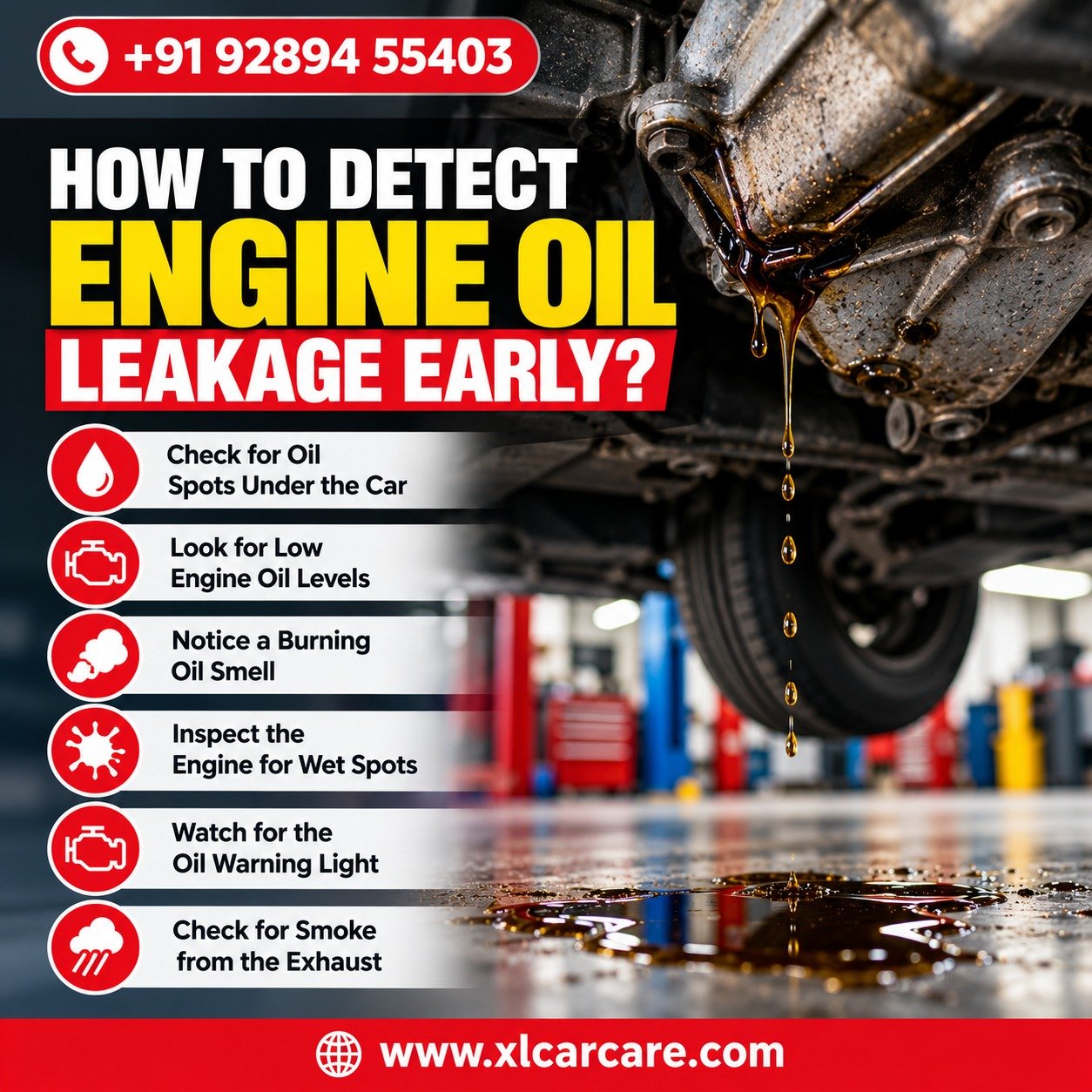
What Changes After Driving the Car?
Some oil leaks only appear after driving. Heat expands engine components. This creates small gaps in worn seals.
You may not see any leak when the engine is cold. But after a long drive, oil may start escaping.
If you notice oil smell or light smoke after parking, it is a strong sign of heat-related leakage.
What You Notice When the Car Is Parked?
Oil spots under the car are a clear sign. These spots may not appear every time.
If the car is parked for long hours, oil settles at the lowest point. It slowly drips from weak areas.
Fresh oil spots look dark and shiny. Old stains look dry and faded.
Checking the parking area daily helps in early detection.
Where to Look Inside the Engine Area?
Open the hood and check the upper engine area. Look near the valve cover. Any oil spread here indicates a gasket issue.
Check around the oil filter. If oil is present near it, the filter may be loose or damaged.
Inspect the lower part of the engine. Oil around the oil pan usually indicates leakage from below.
Each area gives a clue. Identifying the location makes diagnosis easier.
Why Oil Level Drops Without Visible Leak?
Sometimes oil reduces but no leak is visible. This usually means oil is burning inside the engine.
You may notice light blue smoke from the exhaust. This indicates internal leakage.
In such cases, regular oil checks become important. Ignoring this can damage internal components.
Simple Way to Confirm a Leak
Start with a clean engine surface. Wipe visible oil if needed.
Drive the car for a short distance. Let the engine reach normal temperature.
Park the car and inspect again. Fresh oil marks will be easier to identify.
This method helps locate even minor leaks.
Common Reasons Behind Oil Leakage
Gaskets and seals wear out with time. They lose their flexibility.
Using incorrect engine oil affects pressure inside the engine.
Low-quality oil increases wear on components.
Improper servicing also causes leakage. Loose fittings or incorrect installation create gaps.
Overheating damages seals and increases leakage chances.
Luxury vehicles require accurate servicing. Even a small mistake can cause leakage. Regular inspection at a BMW repair and service center in Delhi NCR helps detect such issues early.
Driving Conditions That Increase Risk
Heavy traffic increases engine temperature. This weakens seals over time.
Dust mixes with oil and creates buildup around joints.
Monsoon conditions affect rubber parts. Moisture reduces their strength.
Frequent short drives do not allow the engine to stabilize. This affects oil flow.
These factors increase the chances of leakage.
What Happens If You Ignore It?
Oil leakage reduces lubrication. Engine parts start rubbing against each other.
This increases heat and wear.
Performance drops gradually. Mileage may also decrease.
Oil reaching hot surfaces can create smoke.
Ignoring the issue for long can damage the engine.
How to Prevent Oil Leakage?
Check oil level regularly. This helps detect changes early.
Use the correct engine oil recommended for your car.
Inspect engine parts during servicing.
Fix small leaks immediately. Do not delay repairs.
Professional inspection improves accuracy. A trusted Skoda repair and service center in Delhi NCR can identify hidden issues before they become serious.
Why Professional Inspection Helps?
Modern engines are complex. Small leaks are not always visible.
Technicians use proper tools to inspect pressure and seals.
They can identify issues before they grow.
Regular servicing improves engine life.
Detecting oil leakage early keeps your engine safe. It also helps maintain performance and reliability.