
Your car may feel normal after driving on a rough road. There is no warning light. There is no visible damage. But inside, many parts may already be under stress.
Bad roads do not always cause instant failure. The real problem starts later. Small impacts build pressure on important components. Over time, this leads to costly repairs and safety risks.
What Happens When Your Car Hits Bad Roads?
Every pothole creates a sudden impact. The force travels through the tyre into the suspension. This force is not small. It is sharp and direct.
The suspension tries to absorb this shock. But repeated impacts weaken its ability. The stress then moves to other parts like joints, bearings, and the steering system.
Water-filled potholes make the situation worse. You cannot judge their depth. The impact becomes unpredictable. This increases the risk of hidden damage.
Hidden Tyre Damage You Cannot See
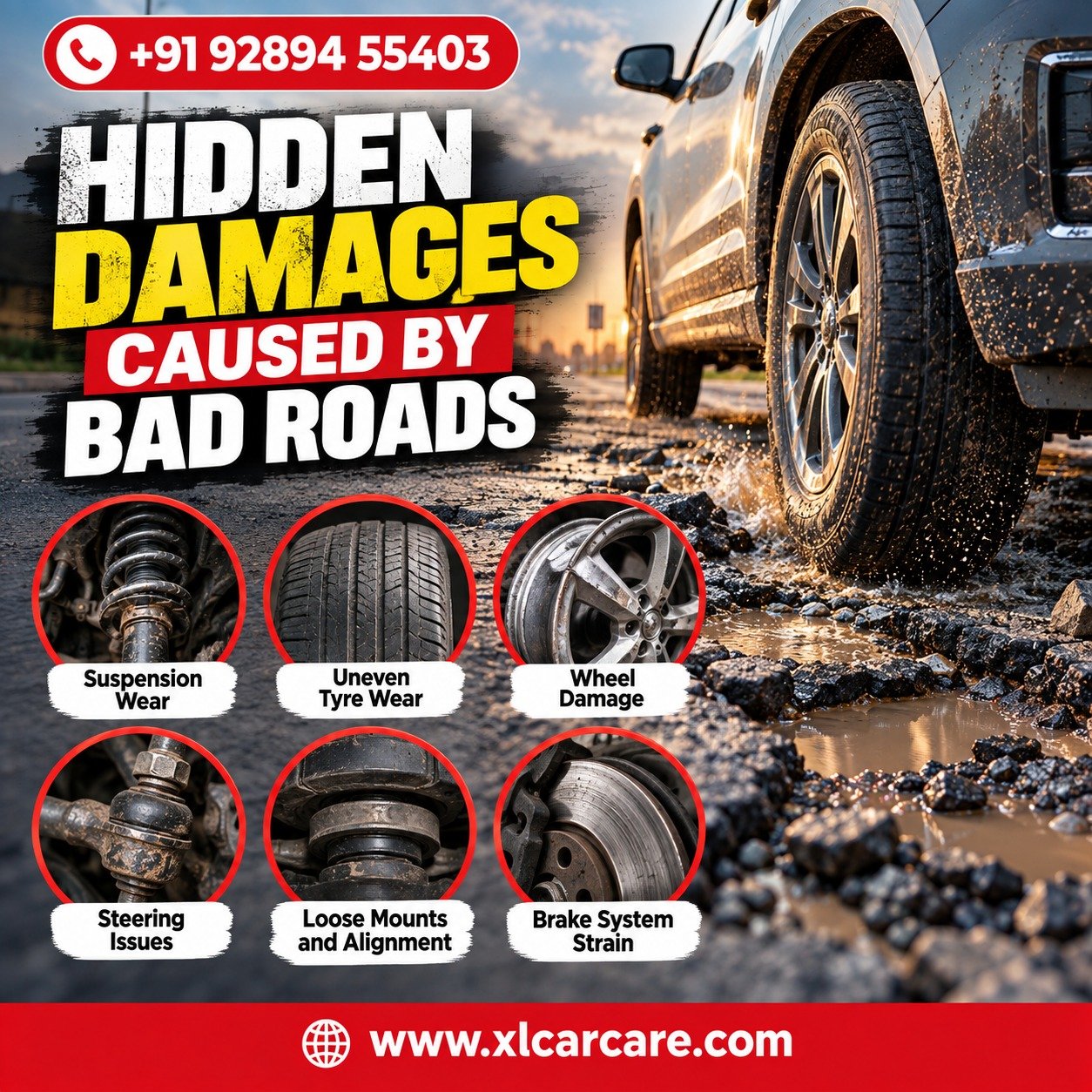
Tyres take the first hit. Damage is not always visible from outside.
The internal structure of the tyre can weaken. Small cracks can form inside. Air pressure may still look normal. But the strength is reduced.
This leads to problems later. You may notice uneven wear. The car may feel unstable at higher speeds. In some cases, a sudden tyre failure can happen.
Wheel Alignment Issues Start Quietly
Even a single hard impact can disturb wheel alignment. The change may be very small at first.
You may not feel it immediately. But after a few days, the car may start pulling to one side. Steering may not feel centered.
Ignoring this issue leads to faster tyre wear. It also affects fuel efficiency.
Suspension Damage Builds Over Time
Suspension parts are designed to handle shocks. But bad roads push them beyond limits.
Shock absorbers lose their efficiency. Bushings begin to wear out. Springs may lose balance.
This damage does not happen in one day. It builds slowly. You may hear noise over bumps. The ride may feel less smooth.
Underbody Damage Often Goes Unnoticed
The lower part of your car is always at risk on uneven roads.
Speed breakers, potholes, and broken surfaces can hit the underbody. Scratches and dents may not be visible without inspection.
Important components like the exhaust system or oil pan can be affected. Even a small dent can cause long-term issues.
Steering System Stress and Misalignment
Steering components are connected to suspension and wheels. When one part is affected, others also feel the impact.
Bad roads can loosen tie rods and joints. Steering response becomes less accurate.
You may notice delay while turning. The steering wheel may feel heavier or loose.
Damage That Appears Later
This is where most car owners get confused. The damage is not immediate.
You may drive normally for days. Then small signs start to appear.
The car may vibrate at certain speeds. You may hear knocking sounds. Braking may not feel as smooth as before.
These delayed symptoms are a result of earlier impacts. Ignoring them increases repair cost.
Parts Most Affected by Bad Roads
Some components face higher stress on rough roads.
Shock absorbers handle repeated impacts. Bushings absorb vibration. Ball joints support movement. Wheel bearings help smooth rotation. Brake parts face extra load when control is affected.
All these parts work together. Damage in one area can affect others.
Effect on Fuel Efficiency
Bad roads do more than physical damage. They also affect performance.
Poor alignment increases rolling resistance. The engine works harder. This leads to higher fuel consumption.
Suspension issues also reduce efficiency. The car loses smooth movement. Energy loss increases.
Cost Impact of Ignoring Early Signs
Small issues are easier to fix. But they become expensive when ignored.
A simple alignment check costs very little. But if ignored, it can damage tyres. Replacing tyres is much more expensive.
Suspension repairs can also become costly. Early inspection saves money and prevents major breakdowns.
Warning Signs You Should Not Ignore
Your car gives signals. You need to notice them.
Vibration while driving is one sign. Steering pulling to one side is another. Uneven tyre wear is also important. Noise from the suspension should not be ignored.
These signs indicate hidden damage. Early action prevents bigger problems.
How to Reduce Damage from Bad Roads?
Driving style plays a big role. Slow down on rough patches. Avoid sudden braking over potholes.
Do not drive fast through water-filled roads. You cannot judge the depth. This increases the impact force.
Maintain proper tyre pressure. It helps absorb shocks better.
Regular inspection is also important. Check alignment and suspension at intervals.
When You Should Get Your Car Checked?
After hitting a deep pothole, inspection is a good step. Even if the car feels normal.
Post-monsoon check is also useful. Roads are usually worse during this time.
If you notice vibration or noise, do not delay inspection.
Professional Inspection Matters
Modern cars have complex systems. A proper inspection requires expertise.
Experienced service centers can identify hidden damage early. They use proper tools and testing methods.
If you drive a premium vehicle, specialized care becomes more important. For example, regular servicing at a BMW repair and service center in Delhi NCR helps maintain performance and safety.
Choosing the Right Service Support
Not all issues are visible during basic checks. Skilled technicians can identify early signs of wear.
Service centers with experience in multiple brands understand different suspension and steering systems.
For high-end cars, brand-specific servicing is recommended. You can consider a Mercedes repair and service center in Delhi NCR for accurate diagnostics and proper maintenance.
Long-Term Impact on Vehicle Life
Continuous driving on bad roads reduces the lifespan of many components.
Suspension parts wear faster. Tyres need replacement earlier. Steering components lose precision.
All these factors reduce the overall life of the vehicle.
Regular maintenance helps control this impact. It keeps the car safe and reliable.
Why Early Attention Makes a Difference?
Small damage is easier to fix. It requires less time and cost.
Delaying repairs creates chain problems. One damaged part affects others.
Early diagnosis helps maintain performance. It also improves driving comfort.
Conclusion
Bad roads do not just affect comfort. They slowly damage your car from inside.
The biggest risk is hidden damage. It builds over time and shows up later.
Regular checks, careful driving, and timely service can reduce this impact.
Understanding these hidden risks helps you protect your vehicle better.