
Many modern luxury vehicles use turbocharged engines to deliver more power and better fuel efficiency. Brands such as Audi, BMW, Mercedes-Benz, Porsche, Jaguar, and Land Rover rely heavily on turbocharger technology.
While these engines offer impressive performance, they also demand proper maintenance. One of the most important maintenance tasks is regular engine oil service.
Many drivers postpone oil changes because the vehicle still feels normal. Unfortunately, the damage often starts long before warning signs appear.
Understanding how delayed oil service affects turbocharged engines can help you avoid expensive repairs and extend the life of your vehicle.
Why Turbocharged Engines Need Cleaner Oil Than Regular Engines
A turbocharger operates in extreme conditions. It spins at speeds that can exceed 200,000 RPM. It is also exposed to very high temperatures generated by the engine and exhaust system.
Unlike many other components, the turbocharger depends almost entirely on engine oil for lubrication and cooling.
Clean oil performs several critical functions:
- Lubricates turbocharger bearings
- Reduces friction between moving parts
- Removes heat from the turbo assembly
- Prevents carbon deposits from forming
- Protects internal components from wear
When oil becomes old or contaminated, it can no longer perform these tasks effectively. This is one of the main reasons why delayed oil service affects turbocharged engines more severely than naturally aspirated engines.
If you own an Audi, following recommended Audi service intervals can help protect turbocharged engine components and reduce long-term repair costs.
What Happens Inside a Turbocharger When Oil Service Is Delayed?
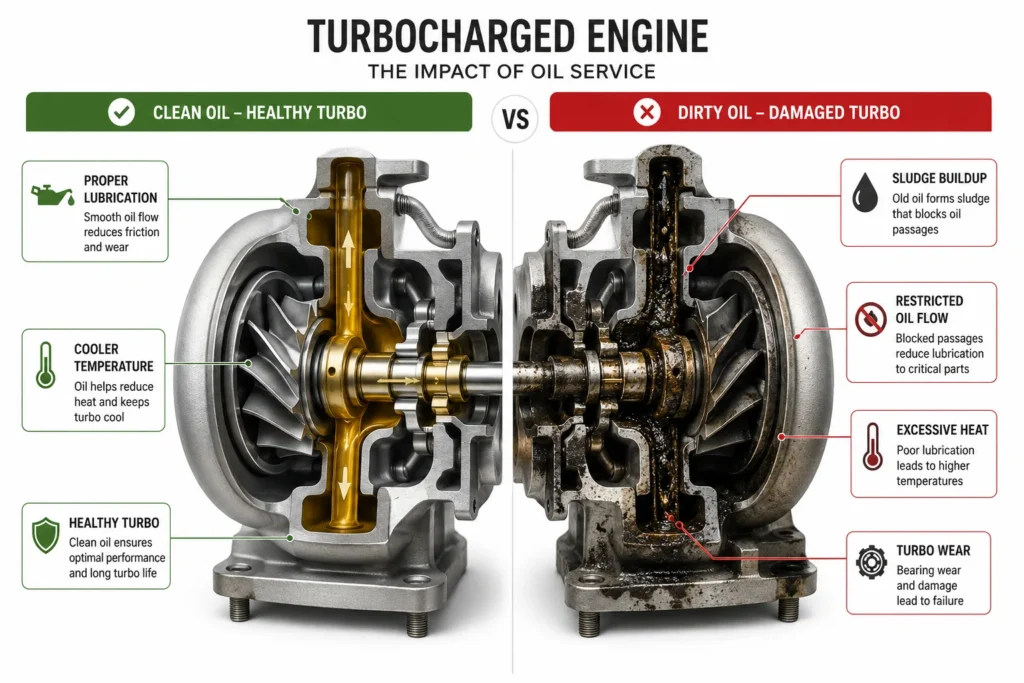
Engine oil breaks down over time. Heat, pressure, moisture, and contaminants gradually reduce its effectiveness.
When oil remains in the engine for too long, several harmful processes begin.
Oil Becomes Thicker
Fresh oil flows smoothly through narrow oil passages.
Old oil becomes thicker. It loses its ability to circulate efficiently.
This restricts lubrication inside the turbocharger. Critical components receive less protection. Friction starts to increase.
Sludge Starts Forming
As oil degrades, it begins forming sludge.
Sludge is a thick deposit created by oxidation and contamination. It can block oil passages inside the engine and turbocharger.
Restricted oil flow is one of the most common reasons why delayed oil service affects turbocharged engines.
Turbo Bearings Begin to Wear
The bearings inside a turbocharger operate under tremendous stress.
Without proper lubrication, metal surfaces start rubbing against each other.
This creates excessive wear. Over time, bearing failure can occur.
Once turbo bearings fail, complete turbocharger replacement may become necessary.
Heat Builds Up Rapidly
Turbochargers generate significant heat during operation.
Engine oil helps remove this heat.
When oil loses its cooling properties, temperatures increase. Excessive heat accelerates wear and can damage seals, bearings, and internal turbo components.
7 Ways Delayed Oil Service Damages Turbocharged Engines
1. Turbo Bearing Failure
Turbo bearings require a constant supply of clean oil.
Dirty oil creates friction and increases wear.
Bearing damage often starts silently. By the time symptoms appear, significant damage may already exist.
2. Oil Starvation
Oil starvation occurs when the turbocharger does not receive enough oil.
This can happen due to sludge buildup, blocked oil passages, or degraded oil.
Even a short period of oil starvation can cause severe turbo damage.
3. Carbon Deposit Formation
Old oil leaves carbon deposits inside turbocharger components.
These deposits restrict airflow and reduce efficiency.
Carbon buildup can also interfere with moving turbocharger parts.
4. Reduced Boost Pressure
A healthy turbocharger generates the boost pressure required for optimal performance.
When internal components wear out, boost pressure decreases.
You may notice slower acceleration and reduced engine response.
This is another common example of how delayed oil service affects turbocharged engines.
5. Increased Oil Consumption
Turbocharger seals rely on proper lubrication.
As wear increases, seals can deteriorate.
This may allow engine oil to enter the intake or exhaust system.
As a result, your vehicle may begin consuming more oil than normal.
6. Premature Turbo Seal Failure
Turbo seals help maintain proper pressure and prevent oil leaks.
Dirty oil accelerates seal wear.
Once seals fail, oil leakage becomes a serious concern.
Luxury vehicle owners often experience this issue when oil service schedules are ignored.
Regular preventive maintenance and timely oil changes remain essential for long-term reliability.
7. Complete Turbocharger Replacement
The most expensive consequence of delayed oil service is complete turbocharger failure.
A damaged turbocharger may require major repairs or replacement.
Repair costs can be significantly higher than the cost of routine maintenance.
This is why understanding how delayed oil service affects turbocharged engines is important for every luxury vehicle owner.
For BMW owners, following a proper preventive maintenance schedule can help avoid turbocharger-related failures and improve long-term engine performance.
Similarly, regular Mercedes-Benz engine maintenance helps reduce the risk of oil-related turbocharger problems and costly repairs.
Warning Signs Your Turbocharged Engine Needs Immediate Oil Service
Most turbocharger failures do not happen overnight.
Your vehicle often gives warning signs before major damage occurs.
Recognizing these symptoms early can save thousands in repair costs.
Blue Smoke From The Exhaust
Blue smoke is often a sign that oil is entering the combustion chamber.
This can happen when worn turbo seals allow oil to leak into the intake system.
Whining Or Siren Noise From The Turbo
A healthy turbocharger should operate quietly.
If you hear a whining, whistling, or siren-like sound during acceleration, internal bearing wear may be developing.
Loss Of Power During Acceleration
A failing turbocharger often struggles to build proper boost pressure.
This can make the vehicle feel sluggish and less responsive.
Increased Engine Oil Consumption
If you find yourself topping up oil more frequently, turbocharger wear could be the cause.
Check Engine Light
Modern luxury vehicles monitor turbocharger performance through multiple sensors.
A check engine light should never be ignored.
Poor Fuel Economy
When a turbocharger operates inefficiently, the engine must work harder.
This often leads to reduced fuel efficiency.
These warning signs clearly demonstrate how delayed oil service affects turbocharged engines over time.
How Delayed Oil Service Affects Luxury Turbocharged Vehicles?
Luxury vehicles use sophisticated turbocharged engines that demand high-quality lubrication.
Ignoring oil service schedules can have serious consequences.
Audi Turbocharged Engines
Many Audi TFSI engines depend on precise oil pressure for turbocharger operation.
Delayed oil changes can contribute to sludge buildup, oil starvation, and premature turbo wear.
Regular servicing at a professional Audi repair and service center in Delhi NCR helps maintain performance and reliability.
BMW Turbocharged Engines
BMW TwinPower Turbo engines are engineered for performance.
However, dirty oil can increase the risk of turbocharger wear, timing chain issues, and reduced fuel efficiency.
Many owners reduce long-term repair costs through regular BMW maintenance and servicing.
Mercedes-Benz Turbocharged Engines
Mercedes turbo engines rely heavily on clean oil circulation.
Poor oil quality can affect turbo performance and overall engine health.
Professional Mercedes repair and service can help identify oil-related problems before they become major repairs.
Porsche Turbocharged Engines
Porsche engines operate under extreme performance conditions.
Turbocharger temperatures can become exceptionally high.
Routine maintenance and timely oil changes are essential for protecting these high-performance systems.
Owners seeking expert care often choose a specialized Porsche repair and service center for preventive maintenance.
Turbocharger Replacement Cost Vs Routine Oil Service
Many vehicle owners delay oil changes to save money.
Unfortunately, the opposite often happens.
| Service | Estimated Cost |
|---|---|
| Routine Oil Change | ₹5,000 – ₹15,000 |
| Turbocharger Repair | ₹40,000 – ₹1,50,000+ |
| Turbocharger Replacement | ₹80,000 – ₹4,00,000+ |
A simple oil service is one of the most cost-effective ways to protect your engine and turbocharger.
How Often Should You Change Oil In A Turbocharged Engine?
The correct oil change interval depends on your driving habits, vehicle model, and oil specification.
- Normal driving: Every 5,000–7,500 km
- Heavy city traffic: Every 4,000–5,000 km
- Performance driving: Every 3,000–5,000 km
- Always follow manufacturer recommendations
Delhi’s traffic conditions often place additional stress on turbocharged engines.
Frequent stop-and-go driving increases heat and accelerates oil degradation.
Best Practices To Protect Your Turbocharged Engine
- Use manufacturer-approved engine oil
- Replace the oil filter during every oil service
- Check engine oil levels regularly
- Avoid aggressive driving when the engine is cold
- Allow the turbocharger to cool after spirited driving
- Schedule regular inspections with qualified technicians
- Address oil leaks immediately
These simple steps can significantly reduce the risk of turbocharger failure and expensive engine repairs.
Why Choose XL Car Care For Turbocharged Engine Maintenance In Delhi?
XL Car Care is a premium luxury car repair and service center in Delhi NCR.
Our team specializes in maintaining high-end vehicles, including Audi, BMW, Mercedes-Benz, Porsche, Jaguar, Land Rover, Volvo, and other luxury brands.
We use advanced diagnostic equipment, genuine parts, and manufacturer-recommended lubricants.
Every vehicle receives careful inspection and attention to detail.
Our technicians understand how delayed oil service affects turbocharged engines and how to prevent expensive failures before they occur.
XL Car Care
Address: B2/31, Mohan Cooperative Industrial Estate, Badarpur, New Delhi, Delhi 110044
Phone: 092894 55403
Email: info@xlcarcare.com
Business Hours: Monday to Saturday: 8:30 AM – 7:00 PM
Sunday: Closed
Need expert assistance? Book an appointment with XL Car Care today or contact our team for professional advice.
Frequently Asked Questions
Can delayed oil changes damage a turbocharger?
Yes. Dirty or degraded oil can reduce lubrication, increase friction, and cause turbo bearing failure.
How long can a turbocharged engine run with old oil?
The answer varies by vehicle. However, prolonged use of old oil significantly increases the risk of engine and turbocharger damage.
What are the first signs of turbocharger failure?
Common signs include blue exhaust smoke, reduced acceleration, unusual turbo noises, increased oil consumption, and poor fuel economy.
Can synthetic oil extend turbocharger life?
High-quality synthetic oil offers better thermal stability and lubrication. This can help improve turbocharger longevity when used according to manufacturer specifications.
Why do turbocharged engines require regular oil service?
Turbochargers operate under extreme temperatures and rotational speeds. Clean oil is essential for cooling, lubrication, and wear protection.
Does dirty oil affect turbo boost pressure?
Yes. Internal wear, carbon deposits, and restricted oil flow can reduce turbo efficiency and boost pressure.
Is turbocharger replacement expensive?
Yes. Turbocharger replacement costs are usually much higher than the cost of routine oil changes and preventive maintenance.
Final Thoughts
Understanding how delayed oil service affects turbocharged engines can help you avoid costly repairs and protect your investment.
Clean oil is essential for turbocharger lubrication, cooling, and long-term reliability.
If you drive a luxury vehicle in Delhi NCR, staying consistent with oil service intervals is one of the smartest maintenance decisions you can make.
At XL Car Care, our experienced technicians help luxury vehicle owners maintain peak performance through expert diagnostics, preventive maintenance, and manufacturer-recommended service procedures.