
A BMW is designed to deliver a smooth and controlled driving experience. The adaptive suspension system plays a major role in achieving that balance. It continuously adjusts the suspension based on road conditions, driving style, and vehicle movement. When the system develops a fault, you may notice a harsher ride, warning messages, or poor handling.
Understanding the early signs of BMW adaptive suspension problems can help prevent further damage and expensive repairs. This guide explains the most common issues, their causes, and when professional diagnosis becomes necessary.
XL Car Care is a premium luxury car repair and service center specializing in high-end vehicles. Our experienced technicians provide comprehensive maintenance solutions designed to preserve the performance and comfort of luxury cars. Using advanced diagnostic equipment and genuine parts, every repair is carried out with precision and attention to detail. If your BMW requires expert inspection, our BMW Repair and Service Center is equipped to diagnose complex suspension faults accurately.
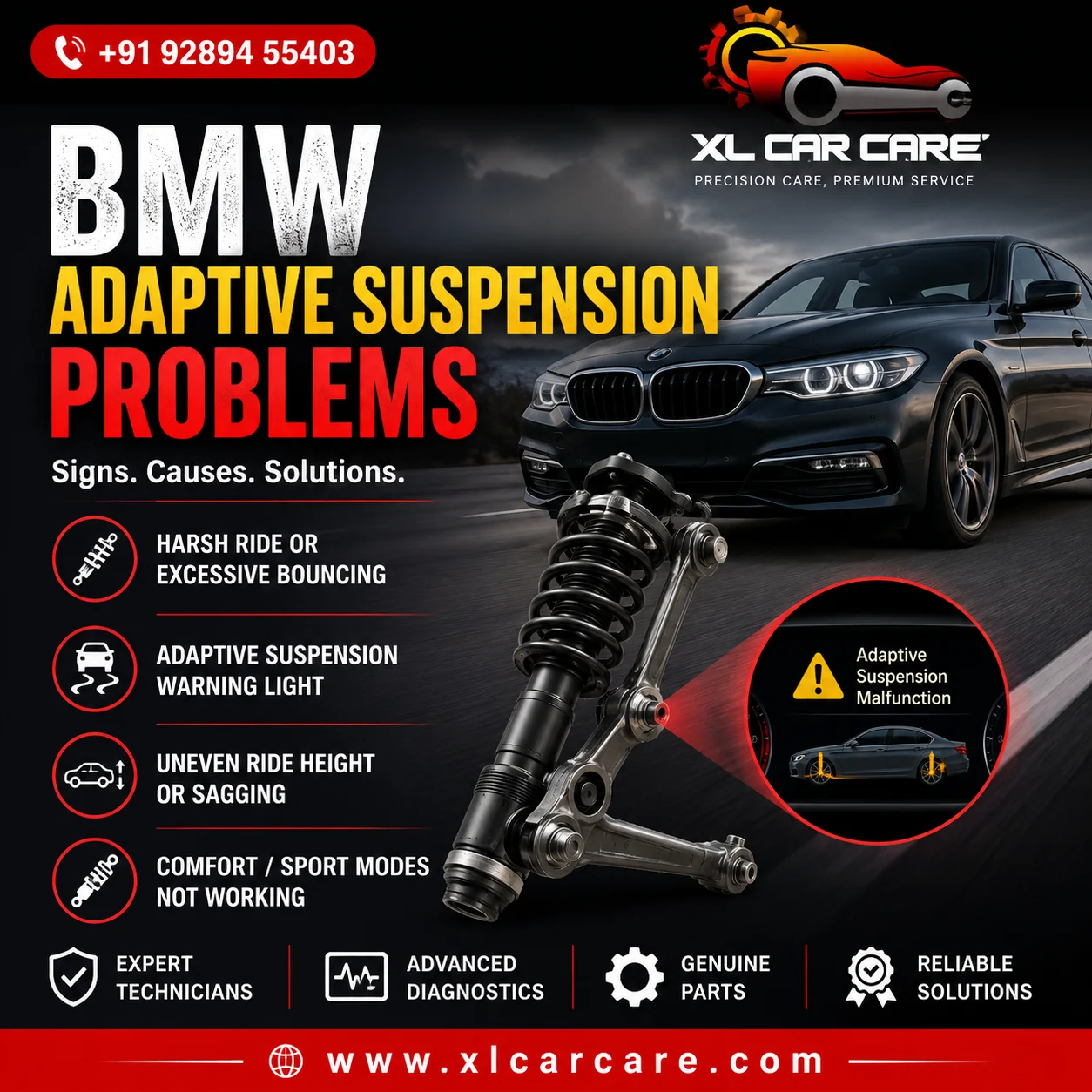
What Is BMW Adaptive Suspension?
BMW Adaptive Suspension is an electronically controlled suspension system. It adjusts the damping force of each shock absorber in real time. The system receives information from multiple sensors installed throughout the vehicle. These sensors monitor steering input, wheel movement, vehicle speed, braking, and road conditions.
Based on this information, the suspension control module changes the stiffness of the dampers within milliseconds. This allows the vehicle to remain comfortable on rough roads while maintaining stability during aggressive driving.
Many BMW models use Adaptive M Suspension or Dynamic Damper Control. Larger models such as the X5, X7, and some 7 Series variants may also include air suspension for automatic ride height adjustment.
How Does the Adaptive Suspension System Work?
Several components work together to maintain ride quality.
- Wheel speed sensors monitor wheel movement.
- Ride height sensors measure suspension position.
- Vertical acceleration sensors detect body movement.
- The suspension control module processes sensor data.
- Electronic dampers instantly adjust damping force.
If even one sensor provides incorrect information, the control module may place the suspension into a protective mode. As a result, the vehicle can feel unusually stiff or display an Adaptive Suspension Malfunction warning.
Common BMW Adaptive Suspension Problems
1. Ride Height Sensor Failure
Ride height sensors measure the position of each wheel. Over time, these sensors may fail because of dirt, moisture, road debris, or worn plastic linkages.
When the sensor sends incorrect information, the vehicle may sit unevenly or display suspension fault messages. The suspension system may also stop adjusting automatically.
Common Symptoms
- Suspension warning light
- Uneven ride height
- Vehicle leaning on one side
- Comfort mode not working properly
2. Electronic Damper Failure
Adaptive dampers contain electronically controlled valves. These valves constantly adjust damping according to driving conditions. As the vehicle ages, internal seals and electronic components may wear out.
A faulty damper can make the vehicle feel overly firm or excessively bouncy. Oil leakage around the shock absorber is another common sign of failure.
Ignoring leaking dampers can also affect tyre wear and vehicle handling.
3. Air Spring Leakage
BMW models equipped with air suspension may develop small cracks in the rubber air springs after years of use. Even a minor leak can slowly reduce air pressure.
Many owners first notice that one corner of the vehicle sits lower after being parked overnight. As the leak grows larger, the air compressor has to work harder to maintain the correct ride height.
Regular inspection helps identify small leaks before they cause additional component failure.
4. Air Compressor Failure
The air compressor supplies compressed air to the suspension system. It operates whenever ride height needs adjustment.
If an air spring develops a leak, the compressor runs more frequently than normal. Continuous operation creates excess heat and increases wear. Moisture inside the system can also damage internal compressor components.
Once the compressor fails, the suspension may no longer maintain proper ride height.
5. Wiring and Electrical Problems
Adaptive suspension systems rely heavily on electrical communication. Damaged wiring, loose connectors, or corrosion can interrupt signals between sensors and the suspension control module.
Even a small wiring fault may trigger warning lights or force the suspension into a fixed damping mode.
Professional diagnostic equipment is often required to locate these faults accurately. At XL Car Care, technicians perform detailed inspections using BMW diagnostic testing to identify sensor, wiring, and control module issues without replacing unnecessary parts.
Warning Signs You Should Never Ignore
Many suspension failures begin with small changes in driving behaviour. Paying attention to these signs can help reduce repair costs.
- Adaptive Suspension Malfunction message
- Suspension warning light
- Vehicle feels unusually stiff
- Comfort and Sport modes stop responding
- One side of the vehicle sits lower
- Excessive bouncing after bumps
- Clunking noises from the suspension
- Poor cornering stability
- Uneven tyre wear
These symptoms do not always indicate complete suspension failure. However, they should never be ignored because continued driving can place additional stress on dampers, compressors, and other suspension components.
Why Do BMW Adaptive Suspension Problems Occur?
Several factors can shorten the life of an adaptive suspension system. Most failures develop gradually rather than suddenly.
- Driving over potholes frequently.
- Poor road conditions.
- Age-related wear of suspension components.
- Water or moisture entering electrical connectors.
- Damaged wiring or sensor connections.
- Air leaks in vehicles equipped with air suspension.
- Ignoring early warning lights.
City driving with frequent speed breakers and uneven roads can place additional stress on suspension components. Regular inspections help identify minor issues before they become expensive repairs.
Can You Drive With an Adaptive Suspension Malfunction?
A BMW may still be drivable after an adaptive suspension warning appears. However, that does not mean the issue should be ignored.
In many cases, the control module switches the suspension into a fixed setting to protect the system. This often results in a firmer ride and reduced driving comfort.
Driving for a short distance to a repair workshop is generally possible if there are no major handling issues. However, continued driving with a faulty suspension can increase wear on tyres, steering components, and other suspension parts.
If the vehicle is sitting unusually low, leaning to one side, or producing loud suspension noises, it should be inspected before further driving.
How BMW Adaptive Suspension Problems Are Diagnosed?
Modern BMW suspension systems require more than a visual inspection. Accurate diagnosis combines electronic testing with a physical inspection of the suspension.
A professional inspection usually includes:
- Reading BMW-specific fault codes.
- Checking live sensor data.
- Inspecting ride height sensors.
- Checking electronic dampers for leaks.
- Inspecting wiring and electrical connectors.
- Testing the air compressor and air lines where applicable.
- Road testing the vehicle.
At XL Car Care, technicians use manufacturer-level diagnostic equipment to identify the actual cause of the fault before recommending repairs. This approach helps avoid replacing parts that are still functioning correctly.
Repair or Replace?
Not every adaptive suspension fault requires replacing the complete system. The correct repair depends on the failed component.
- A faulty ride height sensor can often be replaced individually.
- Damaged wiring may only require electrical repair.
- Leaking air springs should be replaced before the compressor becomes overloaded.
- Leaking electronic dampers usually require replacement.
- A failed compressor should be inspected along with the complete air suspension system to identify the original cause.
Using quality replacement components is equally important. Genuine or OEM-quality parts are designed to work correctly with BMW’s electronic suspension system. Learn more about the importance of using Original BMW Parts during suspension repairs.
How to Reduce the Risk of Suspension Failure
Routine maintenance helps extend the life of adaptive suspension components.
- Avoid deep potholes whenever possible.
- Have the suspension inspected during scheduled servicing.
- Pay attention to new noises or warning lights.
- Repair small air leaks early.
- Maintain correct wheel alignment.
- Replace worn suspension components before they affect nearby parts.
Preventive servicing often costs less than repairing multiple damaged suspension components after a major failure. Following a proper BMW maintenance schedule also helps identify suspension wear before it affects vehicle handling.
When Should You Visit a BMW Suspension Specialist?
Adaptive suspension systems combine electronics, sensors, software, and mechanical components. Accurate diagnosis requires specialized equipment and experience with BMW vehicles.
Professional inspection is recommended if you notice repeated suspension warnings, uneven ride height, excessive bouncing, or reduced driving comfort. Delaying repairs may increase damage to other suspension components.
If your vehicle requires suspension inspection or repair, our specialists also provide dedicated BMW Suspension Repair services for electronic dampers, air suspension systems, ride height sensors, and suspension diagnostics.
Conclusion
BMW adaptive suspension improves comfort, stability, and overall driving performance. Like any advanced system, it requires regular maintenance and timely repairs to continue operating correctly.
Warning lights, uneven ride height, harsh ride quality, or unusual suspension noises should never be ignored. Early diagnosis often prevents additional damage and reduces repair costs.
Routine inspections, quality replacement parts, and professional diagnostics help keep the suspension system performing as intended. Addressing small issues early is one of the best ways to maintain your BMW’s ride quality and long-term reliability.
Frequently Asked Questions
How long does BMW adaptive suspension usually last?
The lifespan depends on driving conditions, maintenance, and road quality. Regular inspections help identify worn components before they fail completely.
Can a faulty sensor trigger an adaptive suspension warning?
Yes. Ride height sensors, acceleration sensors, and damaged wiring can all trigger suspension warning messages.
Is it safe to continue driving after an adaptive suspension warning appears?
The vehicle may still be drivable for a short distance. However, it should be inspected as soon as possible to prevent additional damage.
Can adaptive suspension problems affect tyre wear?
Yes. Incorrect suspension operation can change wheel alignment and tyre contact with the road, leading to uneven tyre wear over time.
Do all BMW models use air suspension?
No. Many BMW models use Adaptive M Suspension or Dynamic Damper Control. Air suspension is generally found on selected premium models such as the X5, X7, and certain 7 Series variants.