
A well-maintained transfer case plays a major role in the performance of your Land Rover. It distributes engine power between the front and rear wheels. This allows the four-wheel-drive system to deliver better traction on highways, rough roads, and challenging terrain.
Ignoring Land Rover Transfer Case Maintenance can lead to expensive drivetrain repairs. Old transfer case fluid, worn seals, or electronic faults may affect driving comfort and vehicle safety. Regular inspection and timely maintenance help extend the life of this important component.
If your vehicle is due for scheduled servicing, our Land Rover Repair and Service Center provides model-specific maintenance for different Land Rover variants.
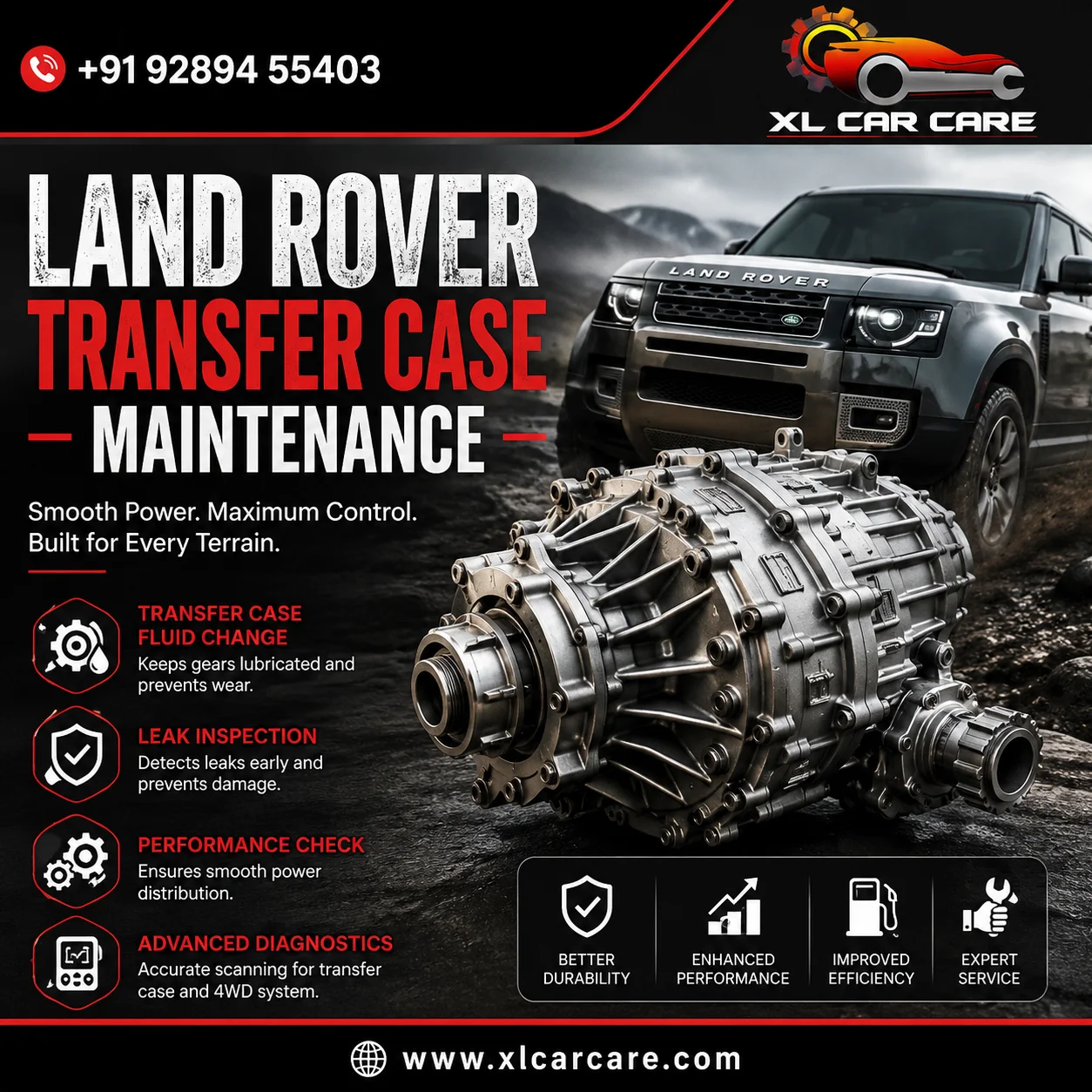
What Is a Transfer Case?
The transfer case is a key part of your Land Rover’s drivetrain. It receives power from the transmission and distributes it to the front and rear axles.
This system allows your vehicle to maintain traction on different road conditions. It also supports features like Terrain Response and permanent four-wheel drive found in many Land Rover models.
Without a properly functioning transfer case, the vehicle may experience poor handling, unusual noises, or drivetrain warning messages.
Power Flow in a Land Rover
Engine → Transmission → Transfer Case → Front & Rear Differentials → Wheels
How Does a Land Rover Transfer Case Work?
The transfer case constantly manages torque distribution between both axles. Modern Land Rover vehicles use electronically controlled systems that automatically adjust power based on road conditions.
Depending on the model, the transfer case may also work with:
- Terrain Response System
- Electronic center differential
- Low-range gearing
- Hill Descent Control
- Traction Control System
These components work together to improve stability and off-road capability. Regular Land Rover Transfer Case Maintenance helps keep these systems operating smoothly.
Why Land Rover Transfer Case Maintenance Is Important?
The transfer case operates under constant load. Internal gears, bearings, chains, and clutch packs rely on clean lubricant to reduce friction and heat.
Over time, the fluid loses its protective properties. Dirt, moisture, and microscopic metal particles can also contaminate it.
Routine maintenance helps:
- Reduce internal wear.
- Maintain smooth power delivery.
- Protect bearings and gears.
- Improve drivetrain reliability.
- Lower the risk of costly repairs.
- Support better off-road performance.
Regular servicing also complements other preventive maintenance tasks. You can learn more about why routine car service is important for luxury cars.
Recommended Land Rover Transfer Case Maintenance Schedule
Service intervals may vary depending on your driving habits and model. Always follow the recommendations in your owner’s manual.
| Vehicle Mileage | Recommended Maintenance |
|---|---|
| 15,000–20,000 km | Visual inspection for leaks and abnormal noises. |
| 30,000–40,000 km | Check transfer case fluid condition. |
| 50,000–60,000 km | Replace transfer case fluid if recommended. |
| 80,000 km+ | Inspect seals, actuators, electronic controls, and drivetrain components. |
If your Land Rover is frequently driven off-road, used for towing, or exposed to water crossings, shorter maintenance intervals are often beneficial.
Owners of Discovery models can also refer to our guide on Land Rover Discovery service intervals.
Transfer Case Fluid: Why It Matters
Transfer case fluid is specially formulated to lubricate gears, bearings, and internal moving parts. It also helps control operating temperature and protects against corrosion.
Using incorrect fluid can affect lubrication and increase component wear. Manufacturer-approved specifications should always be followed.
Signs the Fluid Needs Attention
- Dark or burnt fluid.
- Metal particles in the oil.
- Low fluid level.
- Fluid leakage around the transfer case.
- Burning smell after driving.
Regular fluid inspection is one of the simplest ways to support long-term Land Rover Transfer Case Maintenance.
Expert Tip
Transfer case fluid should never be replaced with a generic lubricant unless it meets the exact specification recommended for your Land Rover model. Using the correct fluid helps protect internal gears, clutch packs, and electronic four-wheel-drive components.
Early Signs Your Transfer Case Needs Maintenance
Small symptoms should never be ignored. Early diagnosis often prevents more expensive repairs.
| Symptom | Possible Reason |
|---|---|
| Grinding noise | Low or contaminated fluid |
| Jerking while turning | Transfer case clutch wear |
| Fluid leak | Damaged seals or gasket |
| Warning light | Electronic control issue |
| Burning smell | Overheated transfer case fluid |
| Difficulty engaging drive modes | Actuator or internal wear |
If these symptoms appear, prompt inspection is recommended to prevent further drivetrain damage.
Common Land Rover Transfer Case Problems
Even with a durable drivetrain, transfer case components experience wear over time. Regular Land Rover Transfer Case Maintenance helps identify these issues before they become major repairs.
1. Transfer Case Fluid Leaks
Leaking seals or gaskets reduce the fluid level. Low lubrication increases friction and accelerates internal wear.
2. Worn Bearings and Gears
Bearings and gears operate under constant load. Old or contaminated fluid can cause excessive wear and abnormal noise.
3. Electronic Actuator Problems
Modern Land Rover models use electronic actuators to control drive modes. A faulty actuator may prevent smooth engagement between different terrain settings.
4. Transfer Case Control Module Faults
The control module communicates with multiple vehicle systems. Software errors or electrical faults may trigger drivetrain warning messages.
5. Chain Stretch
Vehicles with high mileage may develop a stretched transfer case chain. This can cause vibration, knocking noises, or delayed power delivery.
What Causes Transfer Case Damage?
Many transfer case failures develop slowly. Preventive maintenance helps reduce unnecessary wear.
- Skipping scheduled fluid replacement.
- Using incorrect transfer case fluid.
- Frequent off-road driving.
- Regular towing of heavy loads.
- Driving through deep water.
- Ignoring oil leaks.
- Continuing to drive with drivetrain warning lights.
- Poor quality repairs or incorrect installation.
Luxury SUVs often operate under higher drivetrain loads. Preventive servicing protects expensive drivetrain components and supports long-term reliability.
How Transfer Case Maintenance Is Performed?
A professional inspection involves much more than simply replacing the fluid.
- Initial Inspection
The technician checks for leaks, unusual noises, warning lights, and drivetrain concerns. - Computer Diagnostics
Electronic fault codes are scanned to identify any transfer case or control module issues. - Fluid Inspection
The old lubricant is inspected for contamination, discoloration, or metal particles. - Fluid Replacement
The transfer case is refilled using the manufacturer-recommended lubricant. - Seal and Housing Inspection
Seals, mounting points, and the transfer case housing are checked for wear or damage. - Road Test
The vehicle is driven to verify smooth power distribution and proper operation.
Expert Tip
A transfer case fluid change cannot repair damaged gears or bearings. However, replacing the fluid at the recommended interval can significantly reduce normal wear and help extend component life.
Repair or Replace the Transfer Case?
The right solution depends on the condition of the internal components.
| Condition | Recommended Action |
|---|---|
| Minor fluid leak | Replace seals and refill fluid. |
| Contaminated fluid | Drain, inspect, and refill. |
| Electronic actuator fault | Diagnose and repair the actuator or control system. |
| Internal bearing or gear wear | Repair or rebuild after inspection. |
| Severe internal damage | Replacement may be required. |
Early diagnosis usually provides more repair options and helps prevent damage to other drivetrain components.
Land Rover Models That Benefit from Regular Transfer Case Maintenance
Routine transfer case servicing is important for many Land Rover vehicles, including:
- Range Rover
- Range Rover Sport
- Range Rover Velar
- Range Rover Evoque
- Land Rover Defender
- Land Rover Discovery
- Discovery Sport
- Freelander
Owners of Discovery vehicles can also explore our dedicated Land Rover Discovery service and repair guide for additional maintenance information.
Why Choose XL Car Care for Land Rover Transfer Case Maintenance?
Luxury vehicles require specialized knowledge, advanced diagnostic equipment, and manufacturer-approved repair procedures.
XL Car Care is a premium luxury car repair and service center located at B2/31, Mohan Cooperative Industrial Estate, Badarpur, New Delhi, Delhi 110044. Our workshop focuses on the maintenance and repair of high-end vehicles.
Our technicians follow manufacturer-recommended service procedures and use genuine or OEM-quality parts wherever applicable. Every vehicle receives careful inspection, accurate diagnostics, and attention to detail.
Our services include:
- Transfer case inspection.
- Advanced electronic diagnostics.
- Manufacturer-recommended fluid replacement.
- Luxury vehicle preventive maintenance.
- Complete drivetrain inspection.
You can also learn more about Range Rover oil change intervals and cost-effective luxury car maintenance to keep your vehicle in excellent condition.
Land Rover Transfer Case Maintenance Checklist
- ✔ Inspect transfer case for leaks.
- ✔ Check transfer case fluid level.
- ✔ Replace contaminated fluid.
- ✔ Listen for abnormal drivetrain noise.
- ✔ Inspect electronic actuators.
- ✔ Scan for diagnostic fault codes.
- ✔ Check mounting points.
- ✔ Test four-wheel-drive operation.
- ✔ Inspect driveshaft connections.
- ✔ Perform a road test after servicing.
Frequently Asked Questions
How often should Land Rover transfer case fluid be changed?
The recommended interval depends on the model and driving conditions. Many vehicles benefit from inspection around 30,000–40,000 km and replacement as recommended by the manufacturer.
Can I drive with a faulty transfer case?
Driving with a damaged transfer case can increase drivetrain wear and may lead to more expensive repairs.
Does transfer case maintenance improve vehicle performance?
Clean fluid and properly functioning components help maintain smooth power distribution and drivetrain efficiency.
Can low transfer case fluid cause noise?
Yes. Low lubricant levels can increase friction and produce grinding or whining sounds.
Is transfer case fluid the same as transmission fluid?
No. Some models use specific lubricants designed for the transfer case. Always use the fluid specified for your vehicle.
Can water damage a transfer case?
Yes. Water contamination reduces lubrication and may damage internal gears and bearings if not addressed quickly.
Should transfer case maintenance be part of regular servicing?
Yes. Transfer case inspection is an important part of preventive maintenance for four-wheel-drive luxury vehicles.
Conclusion
Land Rover Transfer Case Maintenance is an important part of protecting your vehicle’s drivetrain. Routine inspections, timely fluid replacement, and early diagnosis help reduce wear and support reliable four-wheel-drive performance.
Ignoring early warning signs can lead to expensive repairs that may affect other drivetrain components. Following the recommended maintenance schedule and using the correct lubricants helps extend the service life of your Land Rover.
If your vehicle shows signs of transfer case wear or is due for scheduled maintenance, a professional inspection can help identify potential issues before they become major repairs.