
Porsche Engine Mount Failure Symptoms: Signs, Causes, and Early Warning Indicators.
Your Porsche is engineered for smooth performance, precise handling, and refined driving comfort. If you suddenly notice unusual vibrations, knocking sounds, or excessive engine movement, the engine mounts could be the reason. Recognizing Porsche Engine Mount Failure Symptoms early can help prevent additional wear on surrounding components and reduce the risk of more expensive repairs.
Engine mounts secure the engine to the chassis while absorbing vibrations created during normal operation. Most modern Porsche models use hydraulic engine mounts, while some performance variants are equipped with active engine mounts. Over time, rubber components can deteriorate, hydraulic fluid may leak, and the mount may lose its ability to support the engine correctly.
This guide explains the most common Porsche Engine Mount Failure Symptoms, their possible causes, how to identify them, and when professional inspection is recommended.
What Does an Engine Mount Do in a Porsche?
An engine mount has a simple but important job. It keeps the engine securely positioned while reducing vibrations that would otherwise enter the cabin.
A properly functioning engine mount helps:
- Support the engine’s weight.
- Limit engine movement during acceleration.
- Reduce vibration at idle.
- Protect nearby drivetrain components.
- Improve overall driving comfort.
- Maintain proper drivetrain alignment.
When an engine mount begins to fail, these functions become less effective. The result is often noticeable changes in the way the vehicle feels and sounds.
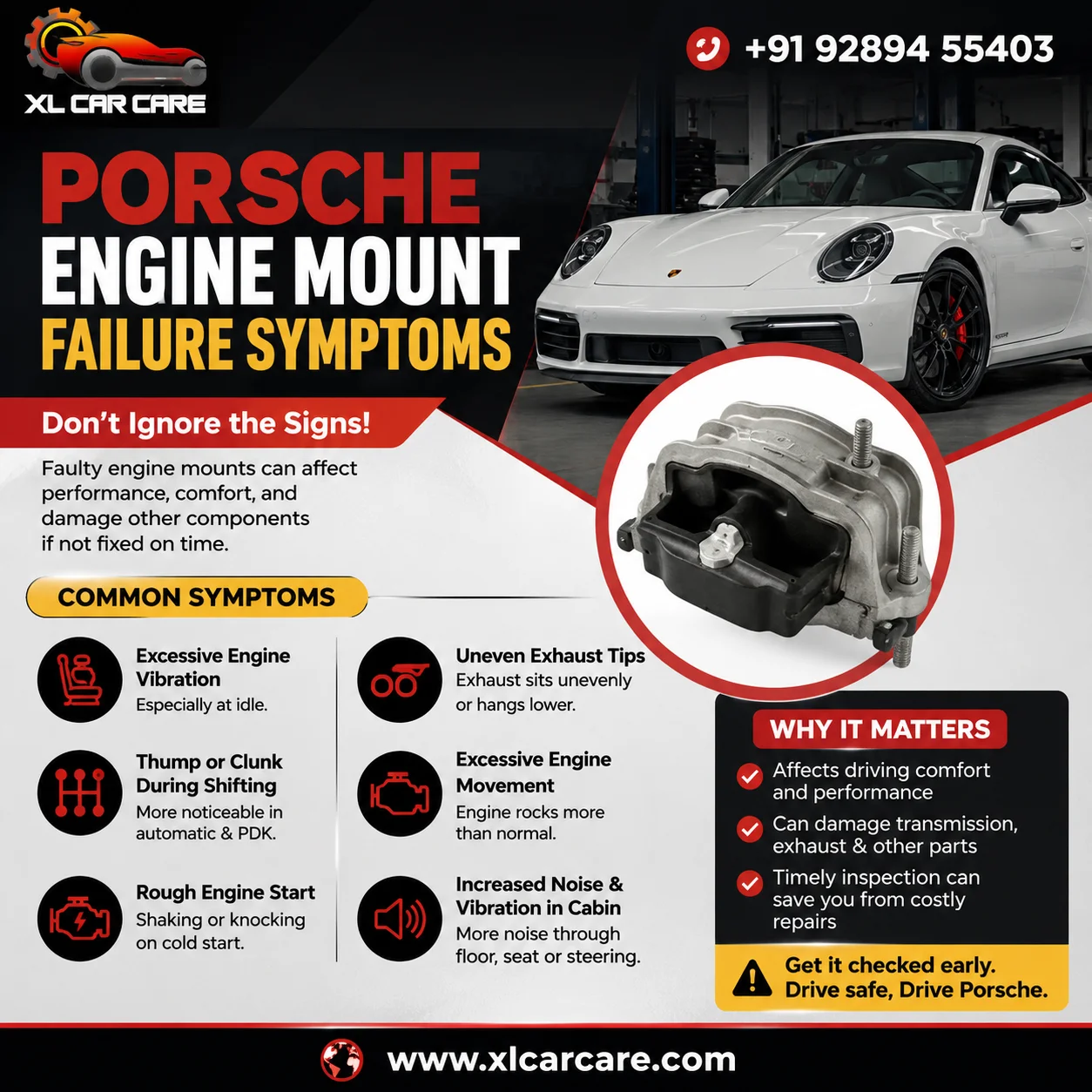
Common Porsche Engine Mount Failure Symptoms
Many warning signs develop gradually. Paying attention to these changes can help you identify a failing mount before it affects other components.
1. Excessive Engine Vibration
This is one of the most common Porsche Engine Mount Failure Symptoms. The cabin may feel rougher than usual, especially while the vehicle is idling.
You may notice vibration through:
- The steering wheel.
- The driver’s seat.
- The floor.
- The pedals.
These vibrations usually become more noticeable at traffic lights or while waiting with the engine running.
2. Clunking or Knocking Noises
A damaged mount may allow the engine to move more than intended. This movement can create clunking or knocking sounds during acceleration, braking, or when driving over uneven roads.
If the noise appears only during gear changes or sudden throttle input, the engine mount should be inspected.
3. Excessive Engine Movement
A healthy engine should move only slightly during acceleration.
If the mount has collapsed or lost hydraulic support, the engine may rock forward or backward more than normal. This extra movement places additional stress on surrounding components.
4. Rough Cold Starts
Many owners first notice Porsche Engine Mount Failure Symptoms during cold starts.
The engine may shake briefly before settling down. In some cases, a light knocking sound accompanies the vibration until the idle stabilizes.
5. Increased Cabin Noise
Engine mounts also help isolate engine noise from the passenger compartment.
As they wear, more mechanical sound may enter the cabin. Drivers often describe the vehicle as feeling less refined than before.
6. Uneven Exhaust Tips
A collapsed engine mount can slightly change the engine’s position.
This may cause the exhaust tips to appear uneven or sit lower on one side. While this symptom does not occur in every vehicle, it can be a useful visual indicator during inspection.
7. Harder or Less Smooth Gear Changes
Engine movement affects drivetrain alignment.
As a result, some drivers notice rougher gear engagement or a slight thump during shifting. This symptom can appear on both automatic and manual Porsche models.
8. Visible Fluid Leakage Around the Mount
Many Porsche models use hydraulic engine mounts.
When these mounts fail, hydraulic fluid may leak from the mount housing. During a visual inspection, you may notice oily residue near the mount or signs that the rubber has started separating.
Symptoms at a Glance
| Symptom | What It May Indicate | Inspection Recommended |
|---|---|---|
| Engine vibration at idle | Reduced vibration absorption | Yes |
| Clunking noise | Excessive engine movement | Yes |
| Engine rocking during acceleration | Collapsed mount | Yes |
| Cabin vibration | Hydraulic mount wear | Yes |
| Fluid leakage | Hydraulic mount failure | Immediate inspection |
| Uneven exhaust tips | Engine position has shifted | Yes |
What Causes Porsche Engine Mount Failure?
Engine mounts are wear-and-tear components. Their lifespan depends on driving habits, mileage, road conditions, and engine heat.
Common causes include:
- Natural rubber deterioration over time.
- Hydraulic fluid leakage from the mount.
- Continuous exposure to engine heat.
- Oil leaks that weaken the rubber.
- Frequent hard acceleration.
- Performance driving or track use.
- Driving on rough or uneven roads.
- High vehicle mileage.
Regular inspections can help identify these issues before they begin affecting the transmission, exhaust system, or other drivetrain components.
Which Porsche Models Commonly Experience Engine Mount Wear?
Engine mount wear can occur in almost any Porsche model as mileage increases. However, hydraulic mount deterioration is more commonly reported on vehicles that have seen years of regular use.
Models that may develop engine mount wear include:
- Porsche 911.
- Porsche Cayenne.
- Porsche Macan.
- Porsche Panamera.
- Porsche Boxster.
- Porsche Cayman.
- Porsche 718.
The exact symptoms can vary depending on the model, engine configuration, and mount design. A proper inspection is the most reliable way to confirm the source of the problem.
How to Diagnose Porsche Engine Mount Failure?
Some Porsche Engine Mount Failure Symptoms are easy to notice while driving. Others require a closer inspection. Since similar symptoms can also result from transmission mounts or suspension components, a proper diagnosis is important.
A technician will typically check:
- Visible cracks or separation in the rubber mount.
- Hydraulic fluid leakage around the mount.
- Engine movement while gently revving the engine.
- Abnormal vibration during idle.
- Noise during acceleration or braking.
- Signs of engine misalignment.
Performance Porsche models equipped with active engine mounts may also require electronic fault diagnosis if the system reports a related warning.
Hydraulic vs. Active (PADM) Engine Mounts
Not every Porsche uses the same type of engine mount. Understanding the difference helps explain why symptoms may vary between models.
| Hydraulic Engine Mount | Active (PADM) Engine Mount |
|---|---|
| Uses hydraulic fluid to absorb vibration. | Electronically adjusts stiffness based on driving conditions. |
| May fail due to fluid leakage. | Can develop mechanical or electronic faults. |
| Common on many standard Porsche models. | Often found on higher-performance variants. |
| Usually causes vibration as it wears. | May trigger warning messages along with vibration. |
Can You Drive with a Bad Engine Mount?
It is sometimes possible to drive a vehicle with a worn engine mount for a short period. However, it is not advisable to ignore the issue.
A damaged mount cannot properly control engine movement. Continued driving may increase stress on nearby components and make the repair more expensive.
If you notice severe vibration, loud knocking, or visible engine movement, arrange an inspection as soon as possible.
What Can Happen If the Problem Is Ignored?
Ignoring Porsche Engine Mount Failure Symptoms can affect more than just driving comfort.
Possible consequences include:
- Additional strain on transmission mounts.
- Premature wear of drivetrain components.
- Stress on exhaust connections.
- Damage to nearby hoses or wiring.
- Increased cabin vibration.
- Reduced driving refinement.
Replacing a worn mount early is often simpler than repairing multiple affected components later.
Simple Checks Owners Can Perform
While a workshop inspection is recommended, owners can look for a few basic warning signs.
- Listen for new knocking sounds.
- Notice vibration while the vehicle is idling.
- Look for uneven exhaust tip alignment.
- Check for oily residue near the engine mounts.
- Observe if the engine rocks excessively when lightly revved.
These checks cannot confirm every fault, but they can help determine when professional diagnosis is needed.
Tips to Extend Engine Mount Life
Although engine mounts naturally wear over time, regular maintenance can help maximize their lifespan.
- Repair engine oil leaks promptly.
- Avoid repeated harsh launches.
- Inspect mounts during routine servicing.
- Address unusual vibrations early.
- Replace worn mounts before they affect surrounding parts.
Professional Porsche Inspection at XL Car Care
If you experience Porsche Engine Mount Failure Symptoms, an accurate diagnosis is the first step. A thorough inspection helps determine whether the vibration is caused by the engine mount or another drivetrain component.
At XL Car Care, technicians service a wide range of luxury vehicles using modern diagnostic equipment and manufacturer-recommended repair practices. The workshop specializes in the maintenance and repair of premium vehicles, helping owners maintain performance and driving comfort.
Owners looking for a dedicated Porsche service center or a trusted car workshop can schedule a professional inspection if unusual engine vibration or drivetrain noise develops.XL Car Care
B2/31, Mohan Cooperative Industrial Estate,
Badarpur, New Delhi, Delhi 110044
Phone:092894 55403
Email:info@xlcarcare.com
Business Hours:
Monday to Saturday: 8:30 AM – 7:00 PM
Sunday: Closed
You can also view the workshop location on Google Maps.
Frequently Asked Questions
How do I know if my Porsche engine mount is failing?
Common warning signs include increased vibration, clunking sounds during acceleration, visible engine movement, and hydraulic fluid leakage around the mount.
Can bad engine mounts damage the transmission?
A worn engine mount may increase stress on surrounding drivetrain components over time. Prompt inspection can help prevent additional wear.
Do all Porsche models use hydraulic engine mounts?
No. Many models use hydraulic mounts, while some performance variants are equipped with active engine mount systems.
Should engine mounts be replaced in pairs?
Replacement recommendations depend on the condition of each mount and the vehicle model. A technician can advise after inspection.
What causes engine mounts to wear out?
Age, heat, high mileage, oil contamination, rough road conditions, and repeated hard acceleration are among the most common causes.
Conclusion
Porsche Engine Mount Failure Symptoms often begin with small changes such as increased vibration or occasional knocking sounds. Addressing these signs early can help protect the drivetrain and maintain the smooth driving experience Porsche vehicles are known for.
If you notice unusual vibration, excessive engine movement, or hydraulic fluid leakage, schedule a professional inspection instead of waiting for the problem to worsen. A timely diagnosis can help identify the root cause and support the long-term reliability of your vehicle.
For additional maintenance resources, you may also find our guides on automotive repair services and choosing a trusted car repair center helpful.