
This guide shares practical Audi Quattro System Maintenance Tips, explains the recommended service schedule, highlights common warning signs, and outlines simple habits that help extend the life of your AWD system.
The Audi Quattro system is one of the biggest reasons behind the brand’s confident handling and year-round driving performance. Unlike a conventional two-wheel-drive setup, the Quattro all-wheel-drive (AWD) system continuously distributes power to all four wheels. This improves traction, cornering stability, and control on wet, slippery, or uneven roads.
Like any advanced mechanical system, Quattro also needs regular maintenance. Ignoring fluid changes, tyre care, or drivetrain inspections can increase wear on expensive components such as the differential, transfer case, and driveshaft. Preventive servicing helps maintain performance and reduces the chances of unexpected repairs.
If your vehicle is due for maintenance, choosing an experienced workshop is equally important. At XL Car Care, our technicians specialise in luxury vehicle maintenance using advanced diagnostic equipment and genuine-quality replacement parts. Audi owners looking for an Audi Repair and Service Center in Delhi NCR can benefit from model-specific inspections and maintenance performed according to manufacturer recommendations.
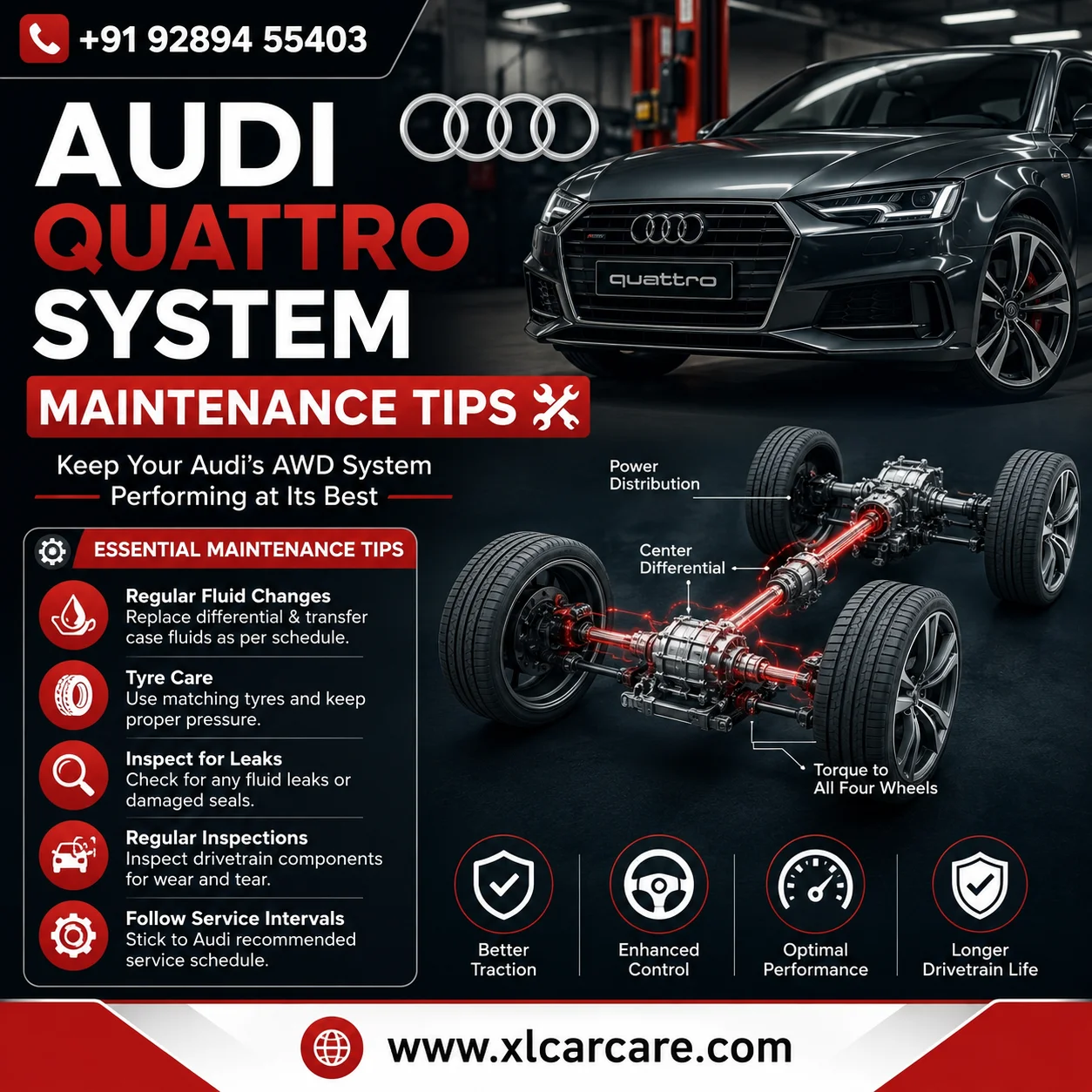
What Is the Audi Quattro System?
The Audi Quattro system is Audi’s permanent all-wheel-drive technology. It continuously delivers engine power to all four wheels instead of only the front or rear axle.
The system automatically adjusts torque distribution whenever road conditions change. This improves grip during acceleration, cornering, rain, loose gravel, or uneven road surfaces.
Modern Audi models use different versions of the Quattro system depending on the vehicle platform. While the design may vary, the goal remains the same—maximising traction without requiring driver intervention.
Because the system contains multiple moving components, regular servicing becomes an important part of long-term ownership. Proper maintenance helps keep every drivetrain component working together smoothly.
How Does the Audi Quattro System Work?
The Quattro drivetrain transfers engine power through several important components before reaching the wheels.
- Engine
- Transmission
- Centre Differential
- Front Differential
- Rear Differential
- Driveshaft
- All Four Wheels
The centre differential constantly balances torque between the front and rear axles. Depending on road conditions, the system redirects power to the wheels with the most available grip.
Electronic sensors monitor wheel speed, steering angle, throttle input, and road conditions within milliseconds. The system responds automatically without requiring any action from the driver.
This advanced operation is one reason why regular drivetrain inspections are an essential part of Audi Quattro System Maintenance Tips.
Different Types of Audi Quattro Systems
Not every Audi uses the same Quattro setup. Different models have different drivetrain configurations.
| Quattro System | Commonly Used In | Main Benefit |
|---|---|---|
| Torsen Quattro | Audi A6, A8, Q7 (older models) | Excellent mechanical torque distribution |
| Crown Gear Differential | Several modern premium Audi models | Faster torque transfer between axles |
| Haldex Quattro | Audi A3, TT, Q3 | Efficient AWD for transverse engines |
| Quattro Ultra | New-generation Audi models | Improved fuel efficiency with intelligent AWD engagement |
Each version has slightly different maintenance requirements. Following the service schedule recommended for your specific model helps maintain long-term reliability.
Audi Quattro System Maintenance Schedule
There is no single maintenance interval that fits every Audi model. Service requirements depend on the model, driving conditions, mileage, and drivetrain configuration.
The following schedule provides a practical maintenance reference for most Quattro-equipped vehicles.
| Vehicle Mileage | Recommended Service |
|---|---|
| Every 10,000 km | General drivetrain inspection |
| Every 20,000 km | Tyre rotation and wheel balance |
| 40,000–60,000 km | Differential fluid inspection or replacement (as applicable) |
| 60,000 km | Transfer case inspection where applicable |
| 80,000 km | Complete AWD system inspection |
| 100,000 km | Major drivetrain preventive maintenance |
Vehicles driven frequently in heavy traffic, mountainous regions, or waterlogged roads may benefit from more frequent inspections.
You can also read our guide on Audi Service Intervals to better understand scheduled maintenance for different Audi models.
Differential Fluid Replacement Matters
One of the most important Audi Quattro System Maintenance Tips is replacing differential fluid at the recommended interval.
Differential fluid lubricates internal gears and bearings. Over time, heat, moisture, and microscopic metal particles reduce its effectiveness.
Old fluid can increase internal friction and accelerate wear.
Fresh lubricant helps:
- Reduce gear wear
- Maintain smooth power delivery
- Improve drivetrain efficiency
- Protect expensive differential components
- Support long-term AWD reliability
Fluid replacement intervals vary depending on the Audi model. Always use the lubricant specified by the manufacturer.
Tyre Maintenance Is Essential for the Quattro System
Many owners focus only on engine servicing and overlook tyre condition. However, uneven tyres are one of the most common causes of unnecessary Quattro drivetrain stress.
Small differences in tyre circumference force the centre differential to compensate continuously. Over time, this can increase wear on drivetrain components.
To protect your AWD system:
- Rotate tyres every 8,000–10,000 km or as recommended.
- Maintain the correct tyre pressure.
- Use the same tyre size on all four wheels.
- Replace tyres as a complete matching set whenever possible.
- Check tread wear regularly.
If your Audi develops uneven tyre wear, it is also advisable to inspect the suspension and wheel alignment. Our guide on Audi Suspension Repair explains how suspension health affects vehicle stability and tyre life.
Components That Should Be Inspected Regularly
The Quattro system consists of several interconnected drivetrain components. A problem in one part can affect the performance of the entire AWD system. Regular inspections help identify wear before it turns into an expensive repair.
Front Differential
The front differential transfers power to the front wheels while allowing them to rotate at different speeds during turns. Check for fluid leaks, unusual noises, and worn seals during scheduled servicing.
Rear Differential
The rear differential plays an equally important role in maintaining traction. Fresh lubricant and periodic inspections help reduce internal gear wear.
Centre Differential
This component distributes torque between the front and rear axles. Any abnormal vibration, grinding noise, or delayed power delivery should be inspected promptly.
Transfer Case (Where Applicable)
Some Audi models use a transfer case as part of the AWD system. Inspecting fluid condition and seals helps prevent premature wear.
Driveshaft and CV Joints
The driveshaft delivers power to both axles, while CV joints allow smooth movement during steering and suspension travel. Damaged CV boots can allow dirt and moisture inside, leading to joint failure.
Wheel Bearings
Worn wheel bearings can create humming sounds and affect drivetrain efficiency. Replacing them early helps prevent additional stress on suspension and drivetrain components.
Common Audi Quattro Problems
Even a well-engineered AWD system can develop problems if maintenance is delayed. Recognising early warning signs helps prevent costly repairs.
| Problem | Possible Cause |
|---|---|
| Whining noise while driving | Low or contaminated differential fluid |
| Vibration during acceleration | Worn CV joints or driveshaft issues |
| Clicking noise while turning | Damaged CV joint |
| Fluid leakage | Worn seals or gaskets |
| AWD warning light | Electronic sensor or drivetrain fault |
| Poor traction | Tyre mismatch or drivetrain issue |
Ignoring these symptoms may lead to more extensive drivetrain damage.
Warning Signs That Need Immediate Attention
Do not wait for a complete system failure before scheduling an inspection.
- Grinding noises from underneath the vehicle.
- Clicking sounds while turning.
- Burning smell after driving.
- Oil leaks near the differential.
- Drivetrain warning messages.
- ABS or traction control warning lights.
- Excessive steering vibration.
- Reduced grip during acceleration.
If your Audi displays drivetrain-related warning lights, professional diagnostics are recommended. Our article on ECU scanning for Audi vehicles explains why electronic fault detection is an important part of preventive maintenance.
Seasonal Audi Quattro System Maintenance Tips
Weather conditions can affect the performance of your AWD system. Seasonal inspections help prepare your Audi for changing road conditions.
Summer
- Inspect differential fluid condition.
- Check tyre pressure frequently.
- Inspect cooling system components.
Monsoon
- Inspect underbody for water damage.
- Check CV boots for cracks.
- Clean mud from suspension components.
Winter
- Inspect battery health.
- Use recommended tyres for low temperatures.
- Check drivetrain seals.
Routine seasonal servicing improves reliability throughout the year. You may also find our guide on Audi Service Tips for Every Season useful.
Maintenance Based on Driving Conditions
Your driving habits have a direct impact on the Quattro system.
City Driving
Frequent stop-and-go traffic increases drivetrain stress. Regular inspections become more important for vehicles driven daily in urban conditions.
Highway Driving
Long-distance driving generally produces less drivetrain stress, but tyre balancing and wheel alignment should still be checked at recommended intervals.
Mountain Roads
Continuous climbing and descending increase the workload on differentials and drivetrain components.
Heavy Rain
Driving through standing water increases the importance of inspecting drivetrain seals and lubricants after the monsoon season.
Simple DIY Checks Between Services
Some basic inspections can be performed without specialised equipment.
- Look for oil leaks beneath the vehicle.
- Inspect tyres for uneven wear.
- Check tyre pressure every few weeks.
- Listen for unusual noises while driving.
- Inspect CV joint boots for visible damage.
- Watch for warning lights on the dashboard.
However, fluid replacement, drivetrain calibration, and electronic diagnostics should always be handled by experienced technicians.
If your Audi requires specialised diagnostics or scheduled maintenance, our Audi service specialists perform comprehensive inspections using manufacturer-compatible diagnostic equipment.
Audi Quattro Maintenance Checklist
Following a simple maintenance checklist helps reduce the risk of unexpected drivetrain problems.
- Inspect drivetrain for leaks.
- Replace differential fluid as recommended.
- Rotate tyres regularly.
- Maintain equal tyre pressure.
- Inspect wheel alignment.
- Check suspension components.
- Scan for electronic fault codes.
- Inspect driveshaft and CV joints.
- Follow scheduled Audi service intervals.
Common Mistakes That Can Damage the Audi Quattro System
Many Quattro problems develop gradually. They are often linked to skipped maintenance or incorrect servicing. Avoiding these mistakes can help protect expensive drivetrain components.
- Ignoring differential fluid replacement.
- Driving with uneven tyre wear.
- Using different tyre brands or sizes.
- Ignoring drivetrain warning lights.
- Skipping wheel alignment after suspension work.
- Using lubricants that do not meet Audi specifications.
- Delaying repairs after noticing unusual noises.
- Ignoring oil leaks around the differential or transfer case.
Following these simple Audi Quattro System Maintenance Tips can help reduce unnecessary wear and improve long-term reliability.
Expert Tips to Extend the Life of Your Audi Quattro System
A well-maintained Quattro system can continue delivering excellent performance for many years. Small maintenance habits often make a significant difference.
- Follow the recommended Audi service schedule.
- Replace drivetrain fluids at the specified intervals.
- Maintain equal tyre pressure on all four wheels.
- Replace all four tyres together whenever possible.
- Inspect the suspension and steering annually.
- Address warning lights without delay.
- Use genuine or manufacturer-approved replacement parts.
- Keep detailed service records.
- Have electronic systems scanned during scheduled maintenance.
- Choose technicians experienced with Audi drivetrain systems.
These preventive steps help preserve handling, traction, and overall driving confidence.
Professional Audi Quattro Maintenance
The Quattro system combines mechanical components with advanced electronic controls. Accurate diagnosis often requires specialised equipment and model-specific expertise.
Routine maintenance performed by experienced technicians helps identify worn components before they lead to larger repairs. Professional inspections also ensure that lubricants, seals, and electronic systems meet Audi’s recommended standards.
At XL Car Care, our team specialises in luxury vehicle maintenance. We use advanced diagnostic equipment and high-quality replacement parts while following manufacturer-recommended service procedures. Every vehicle receives a detailed inspection so potential issues can be identified early.
If your Audi requires scheduled servicing, drivetrain inspection, or electronic diagnostics, you can also explore our resources on Why Regular Audi Service Is Essential and ECU Scanning for Audi Performance.
Frequently Asked Questions
How often should the Audi Quattro system be serviced?
The exact interval depends on your Audi model and driving conditions. Regular inspections should be performed during scheduled servicing, while drivetrain fluids should be replaced according to the manufacturer’s recommendations.
Does the Quattro system require differential fluid replacement?
Yes. Differential fluid gradually loses its protective properties over time. Replacing it at the recommended interval helps reduce internal wear and supports smooth drivetrain operation.
Can mismatched tyres affect the Quattro system?
Yes. Different tyre sizes or uneven tread depth can place additional stress on the centre differential and other AWD components. Matching tyres are recommended for optimal performance.
What are the first signs of Quattro drivetrain problems?
Common warning signs include unusual noises, vibration during acceleration, oil leaks, reduced traction, and drivetrain-related warning lights on the dashboard.
Is wheel alignment important for Quattro vehicles?
Yes. Incorrect wheel alignment can lead to uneven tyre wear and increase drivetrain load. Regular alignment checks support both tyre life and vehicle stability.
Can I inspect the Quattro system myself?
You can perform basic visual checks such as inspecting tyres, looking for oil leaks, and listening for unusual noises. Fluid replacement and electronic diagnostics should always be carried out by qualified technicians.
Conclusion
The Audi Quattro system is designed to deliver outstanding traction, stability, and driving confidence. Like any advanced drivetrain, it performs best when supported by regular preventive maintenance.
Following a proper service schedule, maintaining matching tyres, replacing drivetrain fluids on time, and addressing warning signs early can help extend the life of important AWD components. These practical Audi Quattro System Maintenance Tips not only improve reliability but also help reduce the likelihood of expensive repairs in the future.
If your Audi is due for scheduled maintenance or a complete drivetrain inspection, experienced technicians can help ensure every component is operating as intended.
Contact XL Car Care
XL Car Care is a premium luxury car repair and service centre specialising in Audi, BMW, Mercedes-Benz, Porsche, Jaguar, Land Rover, Volvo, Skoda, Volkswagen, and other luxury vehicles. Our technicians focus on precision servicing using advanced diagnostic tools and high-quality replacement parts to help maintain the performance, safety, and reliability of every vehicle.
Address:
B2/31, Mohan Cooperative Industrial Estate, Badarpur, New Delhi, Delhi – 110044
Phone: 092894 55403
Email: info@xlcarcare.com
Business Hours: Monday to Saturday: 8:30 AM – 7:00 PM
Sunday: Closed
Google Maps: View XL Car Care Location
For service enquiries, visit our Contact Page or Book an Appointment.